
Chainflip Lending is Live: Native BTC Lending Has Arrived

The first permissionless, cross-chain lending market for native Bitcoin is now open to everyone.
Chainflip Lending is live and open to the public. After months of development, testing, and a successful closed beta, users can now lend and borrow native BTC, ETH, SOL, USDC and USDT across chains. No wrapped tokens. No bridges. No centralised intermediaries.
Start lending and borrowing here: https://lp.chainflip.io/lending
What's Available Now
Chainflip Lending launches with full support for most assets on the protocol.
Supply assets and earn yield: Deposit BTC, ETH, SOL, USDC and USDT into lending pools. Interest rates are dynamically determined by utilisation curves, so market forces balance supply and demand naturally.
Borrow against your holdings: Use your native assets as collateral and borrow what you need. Stablecoins against your BTC, SOL against your ETH, whatever combination works for you. Collateralisation ratios are set per asset based on volatility.
Access cross-chain credit: Deposit collateral on one chain, borrow on another. Chainflip's cross-chain settlement layer handles everything natively. No synthetic tokens, no bridges, just real assets moving where they need to go.
Auto-collateralisation: Set up automatic top-ups from your state chain balance when collateral ratios fall below defined thresholds. This eliminates liquidation risk as long as you have balance available.
All positions, rates, and liquidations are visible and auditable on-chain. Developers can integrate lending flows, monitoring, or liquidation data through our open API.
Battle-Tested Through Beta
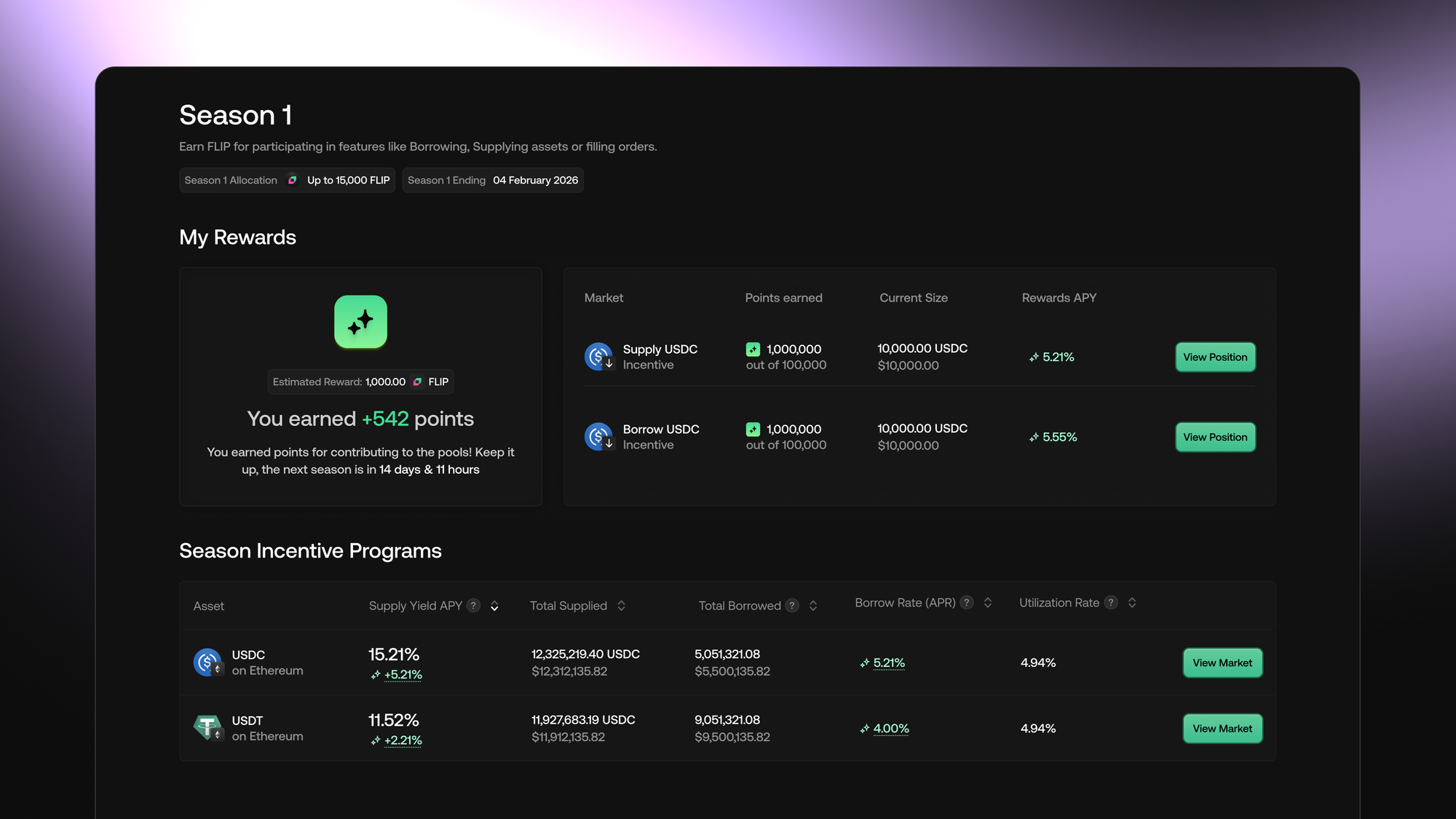
We didn't rush this launch. The Chainflip Lending Closed Beta gave our community and engineering team the chance to stress-test the system in a realistic environment with real assets and real prices.
Participants tested the full lifecycle: real borrowing, real supplying, and real liquidations. We adjusted collateralisation thresholds, refined interest rate curves, and validated that liquidation mechanisms perform as designed under various market conditions.
How Liquidations Work
One advantage Chainflip has over other lending platforms is our built-in swap market. Traditional lending protocols offer massive discounts (5% in Aave's case) to guarantee external actors will fill liquidation orders, since the smart contracts can't trigger liquidations themselves.
Chainflip doesn't have this constraint. With our own markets, we can settle earlier and less aggressively, giving borrowers more headroom and making liquidations gradual rather than binary.
Our soft liquidation mechanism starts unwinding loans when collateralisation falls below threshold, using near-market rates rather than panic pricing. If volatility pushes collateralisation to critical levels, a more aggressive strategy takes over.
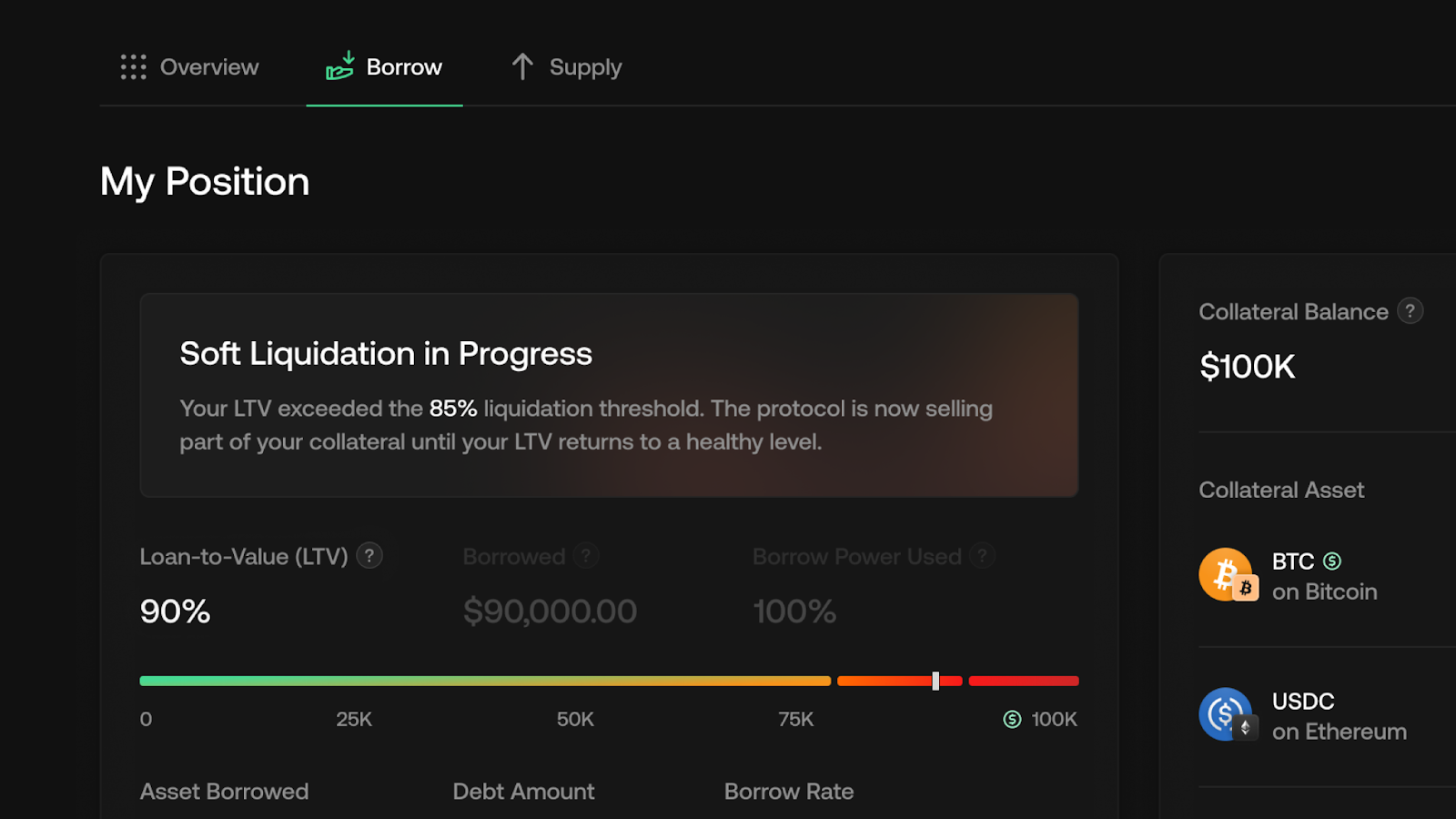
Liquidations also generate order flow for the DEX, which spurs LP activity and creates more liquid markets for regular swappers.
The Gap in DeFi That Native Lending Fills
DeFi lending has grown into one of the largest sectors in crypto. Aave alone holds over $4.3 billion in WBTC collateral. But virtually all BTC lending in DeFi relies on wrapped or bridged assets.
This matters more than most people realise. In most jurisdictions, wrapping BTC into wBTC or cbBTC is treated as a taxable disposal event. The very act of accessing DeFi defeats one of the core purposes of over-collateralised lending: unlocking value without triggering a sale. Bitcoin L2s, bridges, and other attempts to bring DeFi to Bitcoin all share this limitation.
The alternative has been centralised providers and permissioned systems like Maple's Syrup product, where nearly $1 billion in loans have been issued against institutionally held BTC. The demand for native BTC lending is clear, but a decentralised solution hasn't existed until now.
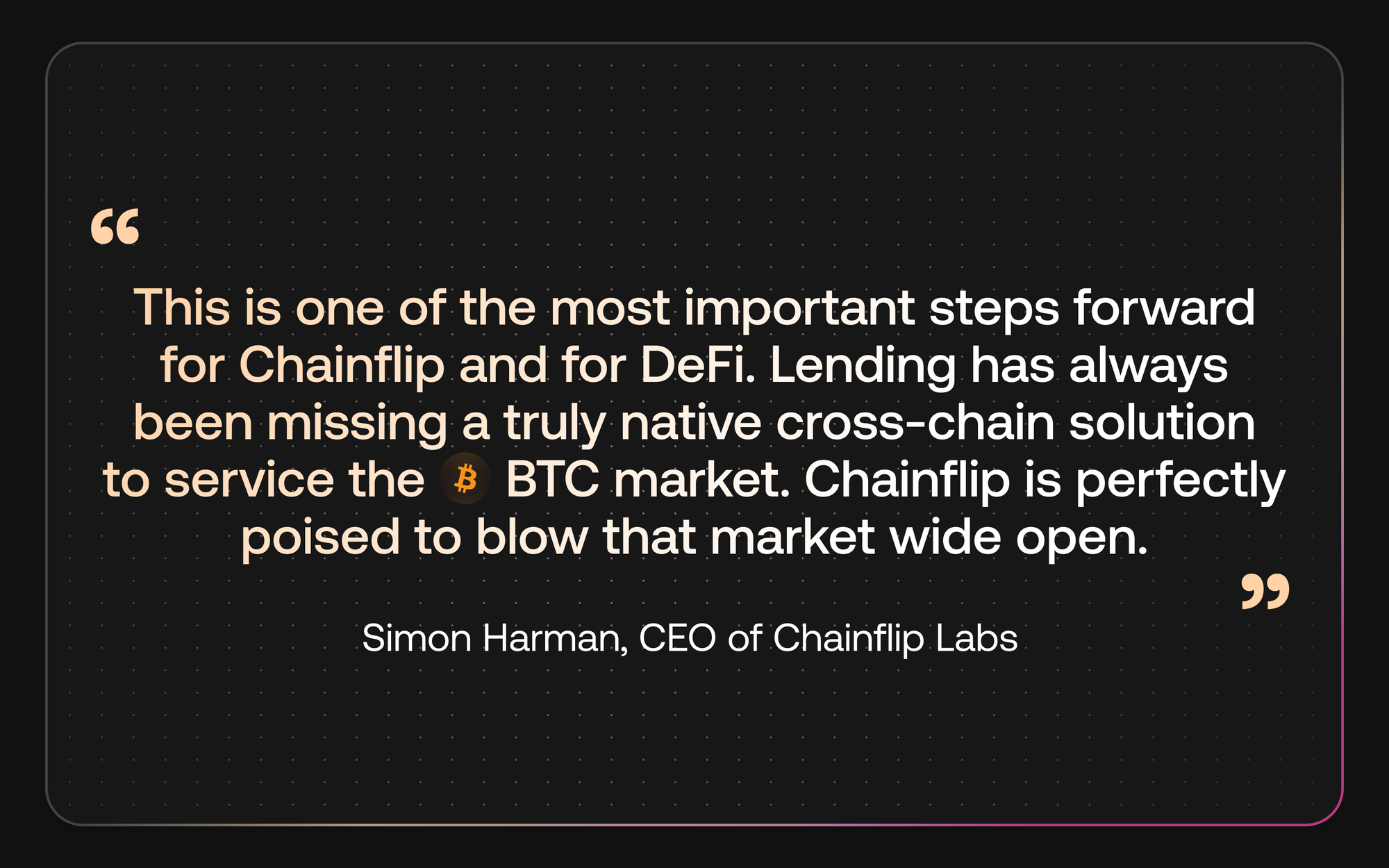
Chainflip Lending is built directly on our threshold signature vault system, the same infrastructure that has processed over $3 billion in cross-chain swap volume with no major security incidents since launch. It works like Aave, but cross-chain, and with native BTC support that Aave can't offer.
What This Means for the Protocol
Lending creates a new revenue stream for Chainflip. All lending fees (origination, interest, and liquidation) contribute to protocol revenue, with 20-30% captured for buy-and-burn or staking rewards under FLIP 2.0.
Based on projected demand between $100 million and $5 billion in outstanding loans, we expect $1 million to $100 million in new annual revenue from lending. Combined with fee revenue from liquidation swaps and broader growth in protocol activity, this expands Chainflip's value capture significantly.
Q4 2025 was already our biggest quarter: $1.69 billion in swap volume, $994K in network fees (an all-time high), and 1.83 million FLIP burned. Lending is the next chapter.
Coming Next: Liquidity Lending & Lending SDK
Today’s launch is Phase 1 of our lending roadmap. Phase 2 will introduce the Lending SDK, enabling developers to integrate lending functionality directly into their applications, wallets or protocols..
Using the SDK, other applications can access our lending pools, giving them functionality to expand their offering to their users beyond swaps, to native cross chain lending.
Additionally, Chainflip liquidity lending, or CLL, will allow LPs to borrow capital on demand to fill user swaps with only a fraction of their own inventory. This dramatically increases the protocol’s capacity to handle large trades.
Get Started
Chainflip Lending is now live at https://lp.chainflip.io/lending. You can connect with your EVM wallet, and start borrowing or lending.
For developers and integration partners, our lending API is documented and ready. Whether you're building a wallet, an aggregator, or another lending frontend, you can offer your users native BTC lending through Chainflip's infrastructure.
We're also working on a dedicated Lending SDK, a developer toolkit that will make it easier for third-party apps, aggregators, and DeFi protocols to integrate Chainflip's lending directly into their products. More details on the SDK will follow as development progresses.
Resources:
- Lend BTC – Borrow against native Bitcoin
- Lending docs – What is Chainflip Lending?
- Swap Now – Start swapping native assets
- Documentation – Technical guides and protocol details
- Blog – Product updates and announcements
- Chainflip Scan – Track swaps and network activity
Join us on Discord: https://discord.com/invite/chainflip-community
Join us on Telegram: https://t.me/chainflip_io_chat
Frequently Asked Questions (FAQ)
What is Chainflip Lending?
Chainflip Lending is the first permissionless, cross-chain lending market for native Bitcoin. It allows users to lend and borrow BTC, ETH, SOL, USDC, USDT, and other supported assets directly across chains without using wrapped tokens, bridges, or centralised intermediaries.
How is this different from other DeFi lending platforms like Aave, Ledn or Maple?
Unlike traditional DeFi lending platforms that rely on wrapped BTC (WBTC) or bridged assets, Chainflip Lending supports native Bitcoin directly. This means you can use your actual BTC as collateral or earn yield on it without converting it to a wrapped version, which in most jurisdictions is treated as a taxable disposal event.
What can I do with Chainflip Lending?
You can supply assets and earn yield by depositing BTC, ETH, SOL, USDC, USDT into lending pools with interest rates determined by utilisation curves. You can borrow against your holdings by using your native assets as collateral to borrow what you need. You can also access cross-chain credit by depositing collateral on one chain and borrowing on another.
How do liquidations work on Chainflip Lending?
Chainflip uses a soft liquidation mechanism that starts unwinding loans when collateralisation falls below a certain threshold, using near-market rates rather than panic pricing. This gives borrowers more headroom and makes liquidations gradual rather than binary. If volatility pushes collateralisation to critical levels, a more aggressive strategy takes over. Liquidations also generate order flow for the DEX, creating more liquid markets for regular swappers.
Is Chainflip Lending secure?
Chainflip Lending is built directly on our threshold signature vault system, the same infrastructure that has processed over $6 billion in cross-chain swap volume with no major security incidents since launch. The protocol went through extensive testing during the closed beta phase, where participants tested the full lifecycle including real borrowing, real supplying, and real liquidations.
How do I get started with Chainflip Lending?
Visit https://lp.chainflip.io/lending to access the lending interface. You can connect with your EVM wallet. From there, you can supply assets to earn yield or use your holdings as collateral to borrow.
Can developers integrate Chainflip Lending into their own products
Yes. The lending API is documented and ready for integration partners. Whether you’re building a wallet, an aggregator, or another lending frontend, you can offer your users native BTC lending through Chainflip’s infrastructure. A dedicated Lending SDK is also in development to make integration even easier for third-party apps, aggregators, and DeFi protocols.
What are the collateralisation requirements?
Collateralisation ratios are set per asset based on volatility. This allows you to use stablecoins against your BTC, SOL against your ETH, or whatever combination works for you. The specific ratios are designed to balance capital efficiency with protocol safety.
How does Chainflip Lending benefit FLIP token holders?
Lending creates a new revenue stream for Chainflip. All lending fees (origination, interest, and liquidation) contribute to protocol revenue, with 20-30% captured for buy-and-burn or staking rewards under FLIP 2.0. This expands Chainflip’s value capture significantly beyond swap fees alone.