
The Stablecoin Era on Chainflip: Cross‑Chain USDC and USDT Without Bridges
Chainflip powers $336M/mo cross-chain USDC/USDT swaps across BTC, ETH, SOL. No bridges. Live data, Tron/BNB expansions, Chainflip Lending now live.

Chainflip is becoming the go-to protocol for cross-chain stablecoin swaps. Here’s every stablecoin live on the network, what’s coming next in cross‑chain stablecoin liquidity, and why the data tells a compelling story for for DeFi traders and liquidity providers
From swaps to lending: how Chainflip turns stablecoins into the backbone of cross‑chain liquidity and yield
Stablecoins are the backbone of crypto and the core “crypto dollars” of DeFi. They settle payments, move capital between chains, and act as the safe harbour when markets turn volatile. But moving stablecoins across blockchains has historically been painful for users who just want to swap USDC or USDT quickly and securely. Bridges introduce smart contract risk. Centralised exchanges require KYC and custody trade-offs. Wrapped tokens add counterparty dependencies most users don’t fully understand.
Chainflip solves this differently. As a decentralised cross-chain swap protocol, it lets users move stablecoins natively between Bitcoin, Ethereum, Solana, Arbitrum, and Polkadot’s Assethub, without bridges, without wrapped tokens, and without centralised intermediaries. In this article, we take a deep look at the stablecoins live on Chainflip today, the ones arriving soon, the real on-chain data showing how they’re being used, and why Chainflip’s stablecoin infrastructure matters for the future of cross-chain stablecoin swaps and DeFi lending.
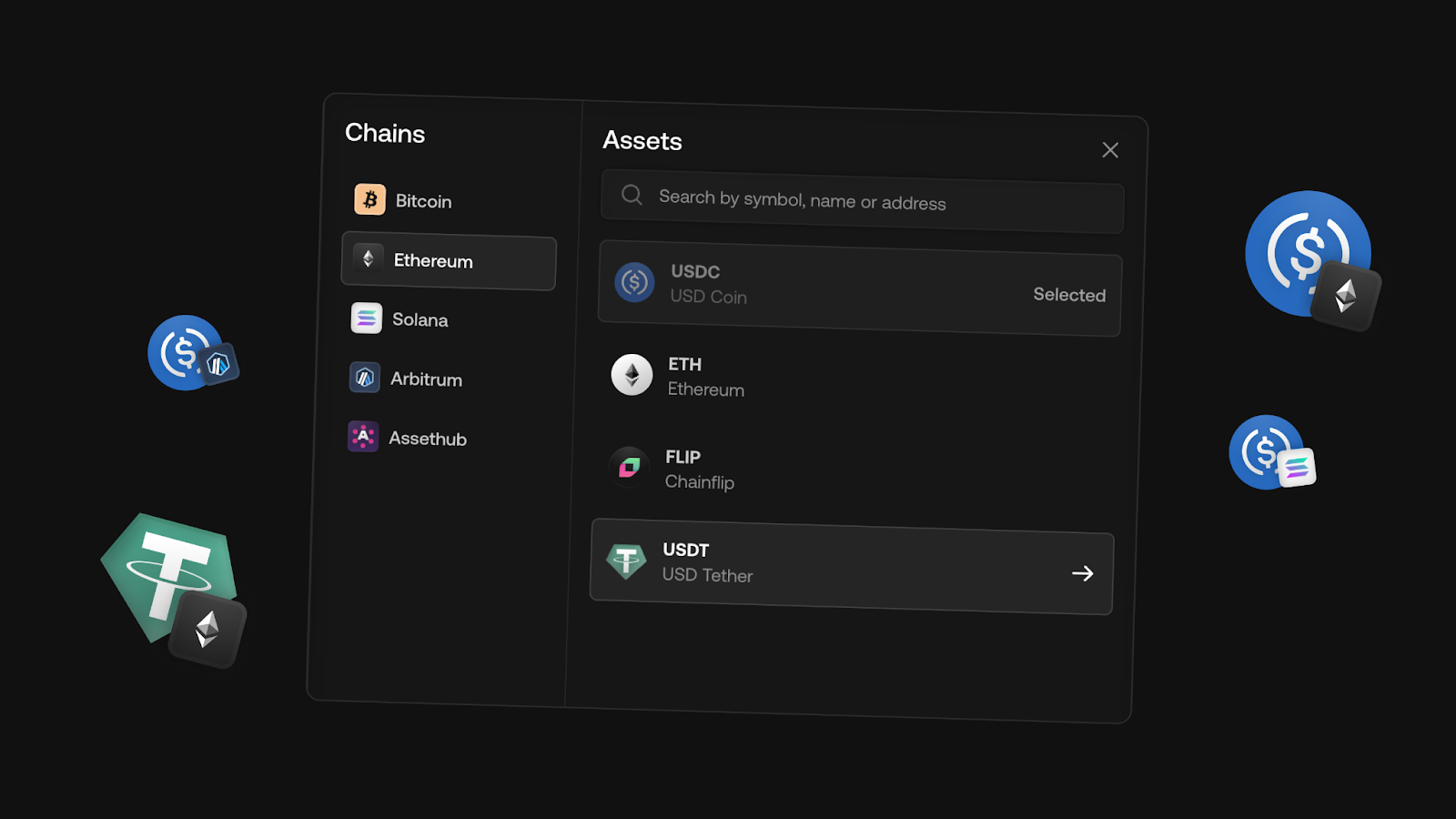
Current Stablecoin Coverage: USDC and USDT Across Five Major Chains
Chainflip currently supports two major stablecoins across five blockchains, making it one of the most versatile decentralised stablecoin swap protocols in the market.
USDC (USD Coin) is available on four chains: Ethereum, Solana, Arbitrum, and Polkadot Assethub. As the primary settlement asset in Chainflip’s JIT (Just-In-Time) AMM, USDC plays a central role in the protocol’s architecture as the base asset for most cross‑chain stablecoin swaps. Every cross-chain swap on Chainflip routes through USDC liquidity pools, which means the stablecoin isn’t just another tradeable asset; it’s the engine that powers the entire exchange. This design choice, using USDC rather than a volatile native token results in significantly better pricing and lower slippage for users, particularly on large USDC‑to‑BTC or USDC‑to‑ETH trades.
USDT (Tether) is available on Polkadot’s Assethub and is being actively expanded to more chains. With USDT handling the majority of global stablecoin transaction volume, particularly across Asian markets, its presence on Chainflip opens crucial corridors for international capital flow and USDT swap activity. The Chainflip Flow Map on burnonomics.com shows that the BTC-to-USDT route alone accounted for $52.24 million in volume over the past 30 days (burnonomics.com/flows), making it the single largest swap pair on the protocol.
Together, these stablecoins enable a comprehensive matrix of cross-chain routes: USDC on Ethereum to SOL on Solana, USDT on Assethub to BTC on Bitcoin, USDC on Arbitrum to ETH on Ethereum, and dozens of other combinations. No wrapping. No bridges. Just native assets moving between chains through non‑custodial cross‑chain stablecoin swaps.
Next Wave: BNB Chain, Tron, and Full USDT Coverage
Chainflip’s stablecoin footprint is about to expand significantly. Two major chain integrations are in active development that will dramatically increase the protocol’s cross‑chain USDC and USDT reach.
BNB Chain is coming with support for USDC and USDT. BNB Chain handles massive stablecoin volume, serving as a primary gateway for retail users, particularly in Asia and emerging markets where USDT payments and remittances are common. Adding BNB Chain to Chainflip means users will be able to swap USDC or USDT on BNB Chain directly to BTC, ETH, SOL, or any other supported asset, all without leaving the decentralised ecosystem.
Tron integration is also on the horizon, bringing USDT on Tron to Chainflip. This is arguably the most consequential stablecoin expansion on the roadmap. Tron processes over $80 billion in USDT transfers monthly and dominates peer-to-peer stablecoin payments globally. When Tron goes live, Chainflip will become one of the few decentralised protocols capable of offering native swaps between Tron’s USDT and assets like Bitcoin and Solana without wrapping or centralised bridges. The implications for global remittance flows, emerging market payment corridors, and cross-chain capital efficiency are enormous.
Beyond chain expansions, USDT support is expanding to Ethereum, Solana, and Arbitrum within the protocol. This means USDT will eventually be available across all of Chainflip’s supported chains, creating full stablecoin parity alongside USDC for cross-chain stablecoin swaps.
These expansions aren’t speculative; they’re actively being developed by the Chainflip Labs team and will be deployed through protocol upgrades voted on by the validator network (chainflip.io/changelog).
On‑Chain Data: Stablecoins Now Drive Chainflip Volume
The numbers tell a clear story. Stablecoins aren’t just supported on Chainflip; they’re driving the majority of crosschain swap volume.
Over the past 30 days, Chainflip processed $336.11 million in total volume across 34,180 swaps with an average swap size of $9,800 (burnonomics.com/flows, February 13th, 2026). The top swap routes by volume are almost entirely stablecoin-dominated. BTC to USDT was the largest pair at $52.24 million (15.5% of all volume, 3,933 swaps). USDT to BTC followed at $48.49 million (14.4%, 3,299 swaps). USDC to BTC came in third at $43.23 million (12.9%, 2,794 swaps). These three stablecoin routes alone account for over $143 million in monthly volume, representing nearly 43% of all Chainflip activity.
The net asset flow data from Burnonomics tells an equally interesting story. Bitcoin was the top net gainer at +$17.08 million, while ArbUSDC (USDC on Arbitrum) was the largest net seller at -$33.34 million (burnonomics.com/flows, February 13th, 2026). This reveals a consistent pattern: users are converting stablecoins into Bitcoin and Solana through Chainflip, while capital enters the protocol primarily through Arbitrum-based USDC. The Arbitrum-to-USDC bridge route alone handled $30 million in 30 days, with an average transaction size of nearly $900,000, pointing to institutional or whale-level usage of Chainflip’s stablecoin swap infrastructure.
At the protocol level, Chainflip has processed over $6.39 billion in total volume across 2 million swaps since launch (chainflip.io, February 13th, 2026), with protocol revenue generating enough to buy and burn 6.46 million FLIP tokens (burnonomics.com). That burn rate is entirely fuelled by swap fees, and a substantial portion of those fees come from USDC and USDT stablecoin trading activity.
Why USDC is Chainflip’s Secret Weapon
Chainflip’s decision to use USDC as its base pair, rather than a native protocol token, is one of its most important architectural choices and a key differentiator from competitors.
Chainflip routes swaps through USDC pools, which means the intermediate asset is stable. There’s no exposure to a volatile protocol token mid-swap. The pricing is more predictable, the slippage is tighter, and the overall user experience is fundamentally smoother. As one community member noted on X, “Using USDC as the pairing for their native crosschain swaps is so much better UX than THORChain’s model” (chainflip.io).
For liquidity providers, the USDC-centric model also means they can deploy capital in a familiar, stable asset. Chainflip’s Dynamic Automated Stablecoin Strategies, introduced in July 2025, let LPs set asymmetric buy and sell spreads that automatically rebalance based on market flow (chainflip.io/changelog). If an LP accumulates too much USDT, the strategy widens the buy range for USDC and tightens the sell range for USDT, encouraging organic rebalancing. This kind of automated, capital-efficient stablecoin market making is unique in the cross-chain space.
Stablecoins Beyond Swaps: Chainflip Lending
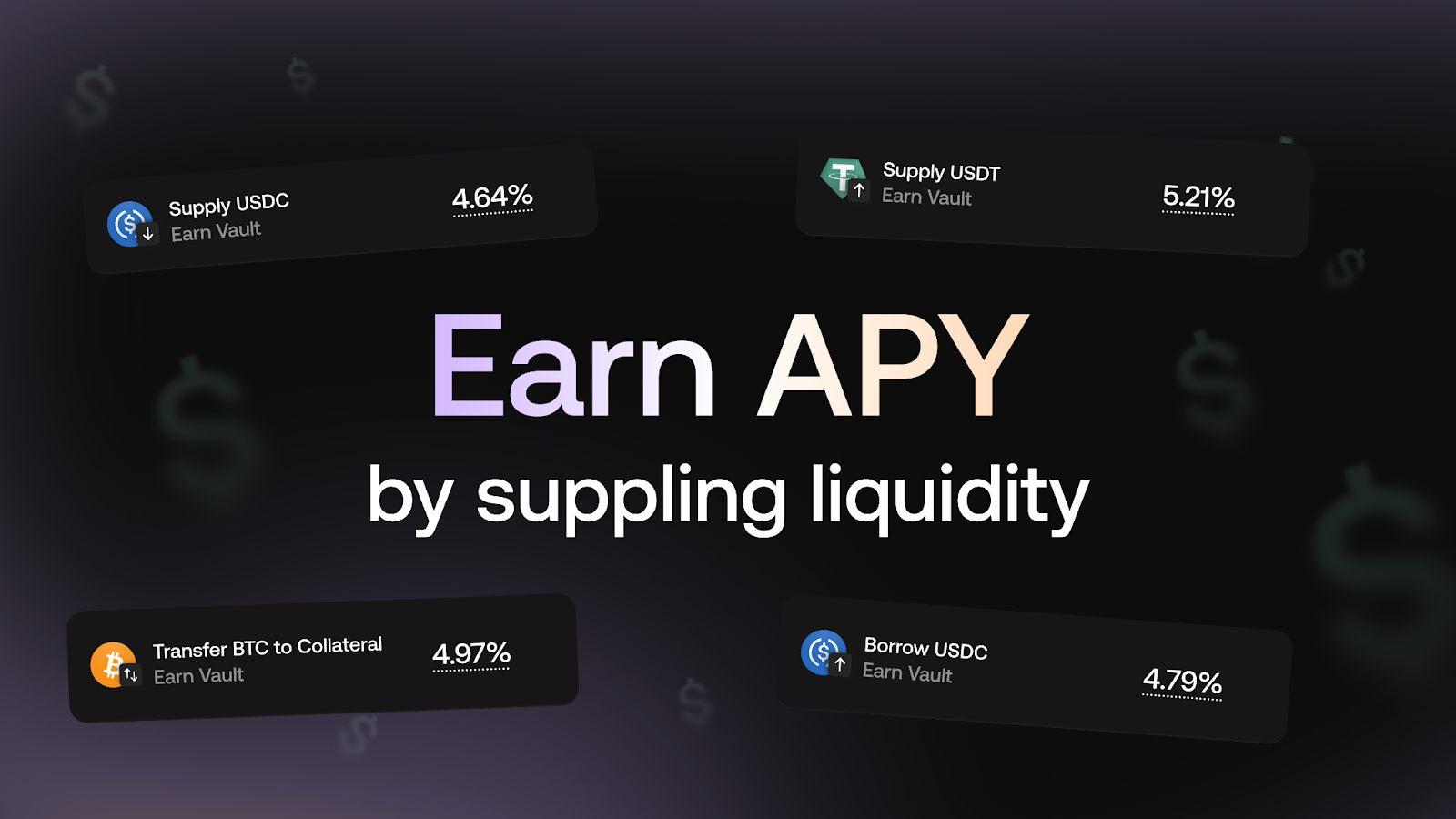
Stablecoins on Chainflip aren’t limited to swaps anymore. With the full public launch of Chainflip Lending in February 2026 (chainflip.io/changelog), USDC and USDT have become borrowable and lendable assets within the protocol.
Users can now supply USDC or USDT as lending capital and earn yield, or borrow stablecoins against collateral like BTC, ETH, or SOL. The lending system features cross-chain credit lines, meaning you can deposit Bitcoin as collateral on Bitcoin’s chain and borrow USDC on Ethereum or Solana, all through the same protocol, no bridges required. Soft liquidations protect borrowers from flash crashes by gradually adjusting positions rather than liquidating them entirely.
This is significant for the stablecoin narrative because it transforms Chainflip from a pure swap protocol into a full-spectrum cross-chain financial platform. Stablecoins become the yield layer, the borrowing base, and the settlement asset all at once. A Bitcoin holder can now deposit native BTC, borrow USDC, and deploy that capital into DeFi on Ethereum or Solana, all without ever touching a centralised exchange or a wrapped token.
The Future: Chainflip’s Position in the Stablecoin Economy
The stablecoin market has crossed $200 billion in total supply globally and shows no signs of slowing. Regulatory frameworks are crystallising in the US, EU, and Asia. Institutional adoption is accelerating. And the infrastructure connecting stablecoins across chains is becoming a critical piece of the crypto stack.
Chainflip is positioned to capture a meaningful share of this growth for several reasons. Its USDC-centric architecture means it already speaks the language of institutional capital. No exotic protocol tokens in the swap path, just stable, audited dollars. Its expansion into Tron and BNB Chain will connect it to the two largest stablecoin transaction networks outside of Ethereum. And its lending platform creates stickiness, giving users a reason to keep stablecoins within the Chainflip ecosystem rather than just passing through.
The protocol’s integration footprint is also expanding rapidly. Phantom wallet (chainflip.io/changelog), MetaMask via Rango (chainflip.io/changelog), SafePal, THORSwap, and other aggregators have already integrated Chainflip routes. As these integrations mature, millions of wallet users will have access to Chainflip’s stablecoin swap infrastructure without even knowing they’re using it. That’s the endgame for cross-chain stablecoin technology: invisible infrastructure that just works.
With over $6.39 billion in lifetime volume, zero lost funds, 150 validators securing the network, and a protocol architecture built from the ground up around stablecoin settlement, Chainflip is building what may become the most important piece of cross-chain stablecoin infrastructure in DeFi. The data already supports it. The roadmap accelerates it. And as the world moves deeper into the stablecoin era, the protocol that moves stablecoins best will be the one that matters most.
Sources
- Swap Now – Start swapping native assets and stablecoins
- Lend BTC – Borrow against native Bitcoin
- Lending docs – What is Chainflip Lending?
- Documentation – Technical guides and protocol details
- Blog – Product updates and announcements
- Chainflip Scan – Track swaps and network activity
- Chainflip Website - Landing page
Join us on Discord: https://discord.com/invite/chainflip-community
Join us on Telegram: https://t.me/chainflip_io_chat
Frequently Asked Questions
What stablecoins can I swap on Chainflip?
Chainflip currently supports USDC on Ethereum, Solana, Arbitrum, and Polkadot Assethub, as well as USDT on Polkadot Assethub. USDT support is expanding to additional chains, and BNB Chain and Tron integrations are in development.
Can I swap USDC to USDT on Chainflip?
Yes. You can swap USDC to USDT cross-chain on Chainflip. For example, you can send USDC on Ethereum and receive USDT on Polkadot Assethub, or swap between different USDC chains like Ethereum to Solana or Arbitrum.
Does Chainflip use wrapped stablecoins?
No. Chainflip handles native assets only. When you swap USDC on Ethereum, you receive real native USDC on the destination chain, not a wrapped or bridged representation. This eliminates bridge risk and custodial dependencies.
What are the fees for stablecoin swaps on Chainflip?
Chainflip charges a 0.1% protocol fee on every swap. Network fees for the source and destination chains apply separately. Market maker spreads vary based on liquidity and trade size. There are no hidden fees or surprise costs.
Can I earn yield on stablecoins on Chainflip?
Yes, in two ways. Liquidity providers can earn trading fees by supplying USDC or USDT to Chainflip’s pools. With the launch of Chainflip Lending, users can also supply stablecoins as lending capital to earn yield from borrowers.
How fast are stablecoin swaps on Chainflip?
Stablecoin swaps between Ethereum, Solana, and Arbitrum typically complete in 2-5 minutes. Swaps involving Bitcoin take longer due to block confirmation requirements, usually 30-40 minutes.
Is Chainflip safe for large stablecoin transfers?
Chainflip has processed over $6.39 billion in volume with zero lost funds. The protocol is secured by 150 validators using threshold signature cryptography and has been audited multiple times. The average swap size over 30 days is approximately $9,800, with many individual swaps exceeding $100,000.
Do I need to connect a wallet to swap stablecoins?
No. Chainflip does not require wallet connections. You simply select your source and destination assets, enter a destination address, and send your stablecoins to the generated deposit address. The swap executes automatically.
What is the USDC to USDT swap route on Chainflip?
USDC and USDT swaps route through Chainflip’s internal liquidity pools. The protocol’s JIT AMM matches your swap with competing market makers who provide the best available price. No external bridges or DEX aggregators are involved.
Will Chainflip support USDT on Ethereum and Solana?
Yes. USDT support is being expanded across all Chainflip-supported chains. Currently available on Polkadot Assethub, USDT will be added to Ethereum, Solana, and Arbitrum through future protocol upgrades.