
How Cross-Chain Swaps Work: The Step-by-Step Mechanics Explained
Cross-chain swaps let you trade assets between blockchains without bridges or wrapped tokens. But what actually happens under the hood? This guide breaks down the technical mechanics step by step.

You click a button, and your Bitcoin becomes Solana. No wrapped tokens, no centralized exchange, no bridge. But what actually happens in those seconds between sending BTC and receiving SOL?
Understanding the mechanics of cross-chain swaps helps you make smarter decisions about where you trade. This guide walks through the technical process in plain terms.
The Core Problem Cross-Chain Swaps Solve
Blockchains don't naturally talk to each other. Bitcoin doesn't know Ethereum exists, and Solana can't verify what happened on Polkadot. This isolation creates a fundamental challenge: how do you trustlessly exchange assets across chains that can't communicate?
Cross-chain swaps solve this by creating a neutral middle layer that can observe and interact with multiple chains simultaneously. Think of it like a multilingual translator who can speak to parties in different languages and ensure the conversation stays honest.
The Five Stages of a Cross-Chain Swap
Let's trace what happens when you swap 0.1 BTC for SOL on a decentralized exchange like Chainflip.
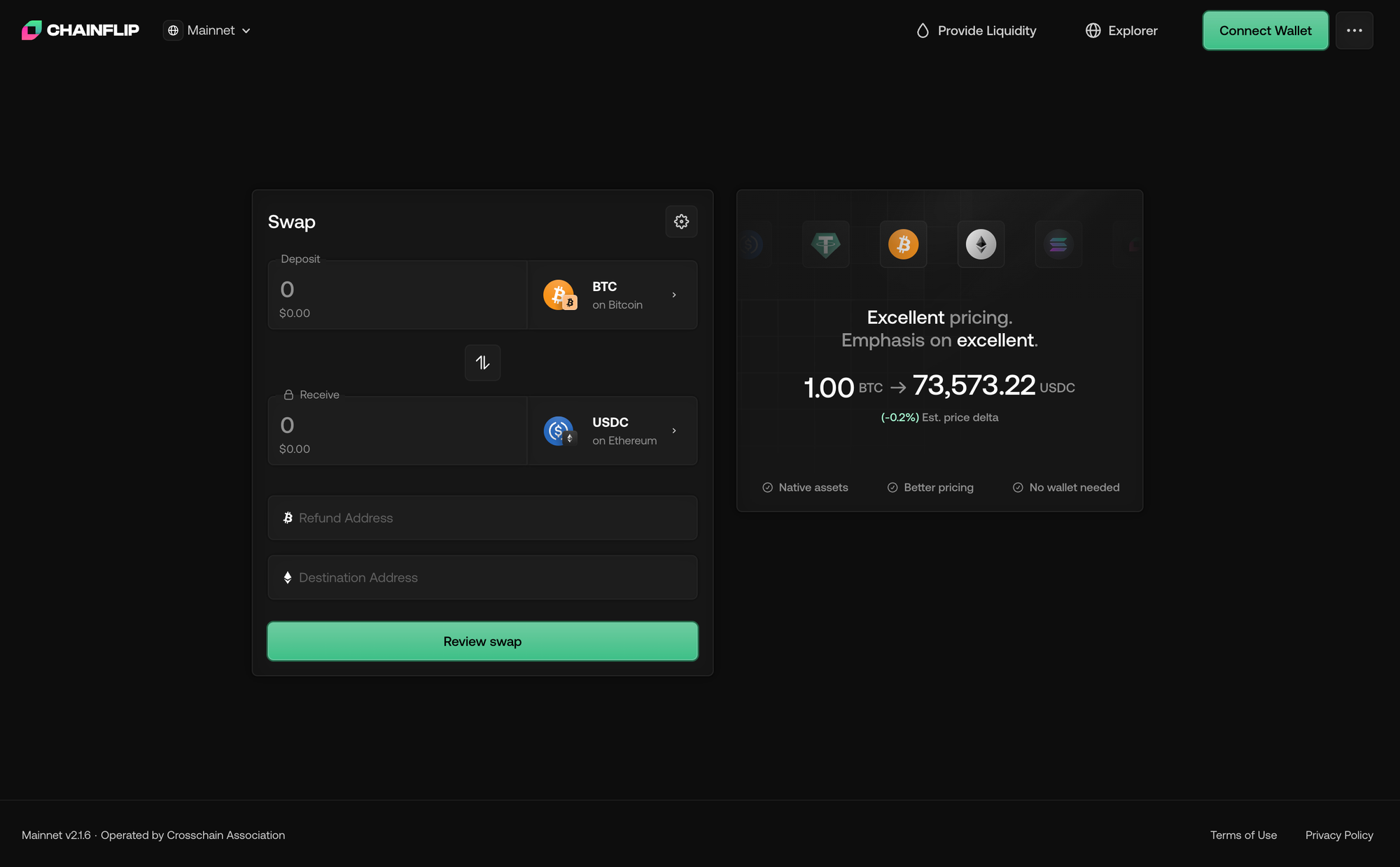
Stage 1: Quote and Route Calculation
Before anything moves, the protocol calculates your expected output. It checks available liquidity across its pools, calculates the exchange rate, and estimates network fees on both chains.
This happens in milliseconds. You see a quoted amount of SOL based on current market conditions.
Stage 2: Deposit to a Secure Vault
You send your BTC to a deposit address controlled by the protocol. This isn't a regular wallet address. It's a vault secured by multiple validators who must collectively authorize any movement of funds.
On Chainflip, these vaults use threshold signature schemes. No single validator can access the funds. A supermajority must agree before any transaction executes.
Stage 3: Deposit Witnessed and Verified
Validators running nodes on the Bitcoin network watch for your incoming transaction. Once it reaches sufficient confirmations (typically 3 for BTC), they attest to the deposit on Chainflip's internal consensus layer.
This witnessing step is crucial. It's how the protocol knows, with cryptographic certainty, that you actually sent the funds you claimed to send.
Stage 4: Liquidity Pool Swap Execution
Here's where the actual exchange happens. Your BTC doesn't travel to Solana. Instead, the protocol uses internal liquidity pools.
Think of it like this: Imagine a currency exchange booth at an airport. You hand over your euros, and they give you dollars from their cash drawer. Your euros don't transform into dollars. The booth maintains reserves of both currencies and facilitates the exchange.
In a cross-chain swap, liquidity providers have deposited both BTC and SOL into pools. When you swap, the protocol takes your BTC (adding it to the BTC pool) and releases equivalent SOL (from the SOL pool) to your destination address. Automated market maker algorithms ensure the exchange rate stays fair based on supply and demand.
Stage 5: Settlement on the Destination Chain
After the swap executes internally, validators sign a transaction on Solana sending native SOL to your specified wallet address. Again, this requires threshold agreement. No single party can redirect your funds.
The SOL arrives in your wallet. The swap is complete.
Why Validators Matter More Than You Think
The security of the entire process depends on validators acting honestly. If they could collude, they could steal funds from the vaults. Protocols use several mechanisms to prevent this.
Economic incentives come first. Validators must stake significant capital that gets slashed if they misbehave. On Chainflip, validators stake FLIP tokens worth millions of dollars collectively, making dishonest behavior economically irrational.
Rotation adds another layer. Validator sets change periodically, and vault keys rotate accordingly. This limits the window during which any particular group of validators controls funds.
Transparency helps users verify. Every swap, every vault balance, and every validator action is publicly auditable on-chain.
The Role of Liquidity Pools
Without liquidity, cross-chain swaps can't happen. Someone needs to supply the assets on both sides of each trading pair.
Liquidity providers deposit assets into pools and earn fees from every swap that uses their liquidity. The more liquidity in a pool, the better rates users get. Low liquidity means higher slippage, which is why large swaps can expose gaps in infrastructure that lacks sufficient depth.
Chainflip's pools hold native assets on their respective chains. The BTC in the Bitcoin vault is real Bitcoin. The SOL in the Solana vault is real Solana. This is different from systems that rely on synthetic or wrapped representations.
Atomic Execution: All or Nothing
Cross-chain swaps must be atomic. Either the entire swap completes, or nothing happens. You can't end up in a state where you've sent BTC but haven't received SOL.
Achieving atomicity across independent blockchains is technically challenging. Protocols handle this through careful sequencing. Your deposit gets locked before any swap executes. The internal swap happens only after deposit confirmation. The outbound transaction happens only after the internal swap succeeds.
If any stage fails, the preceding stages reverse. Funds return to origin. This guarantee protects users from partial execution scenarios.
What Happens If Something Goes Wrong?
Several failure modes can occur, and each has safeguards.
If your deposit transaction fails or you send the wrong amount, the system detects the mismatch. Depending on the protocol, you may receive a partial swap or a refund.
If network congestion delays the destination chain transaction, you simply wait longer. The swap has already executed internally, so your output is guaranteed once the destination chain confirms.
If validators go offline, remaining validators continue operating as long as the threshold for signatures is met. Protocols design for redundancy.
Trying It Yourself
The best way to understand cross-chain swaps is to experience one. On Chainflip, you can swap without connecting a wallet. Simply provide destination addresses, send your deposit, and watch the mechanics unfold.
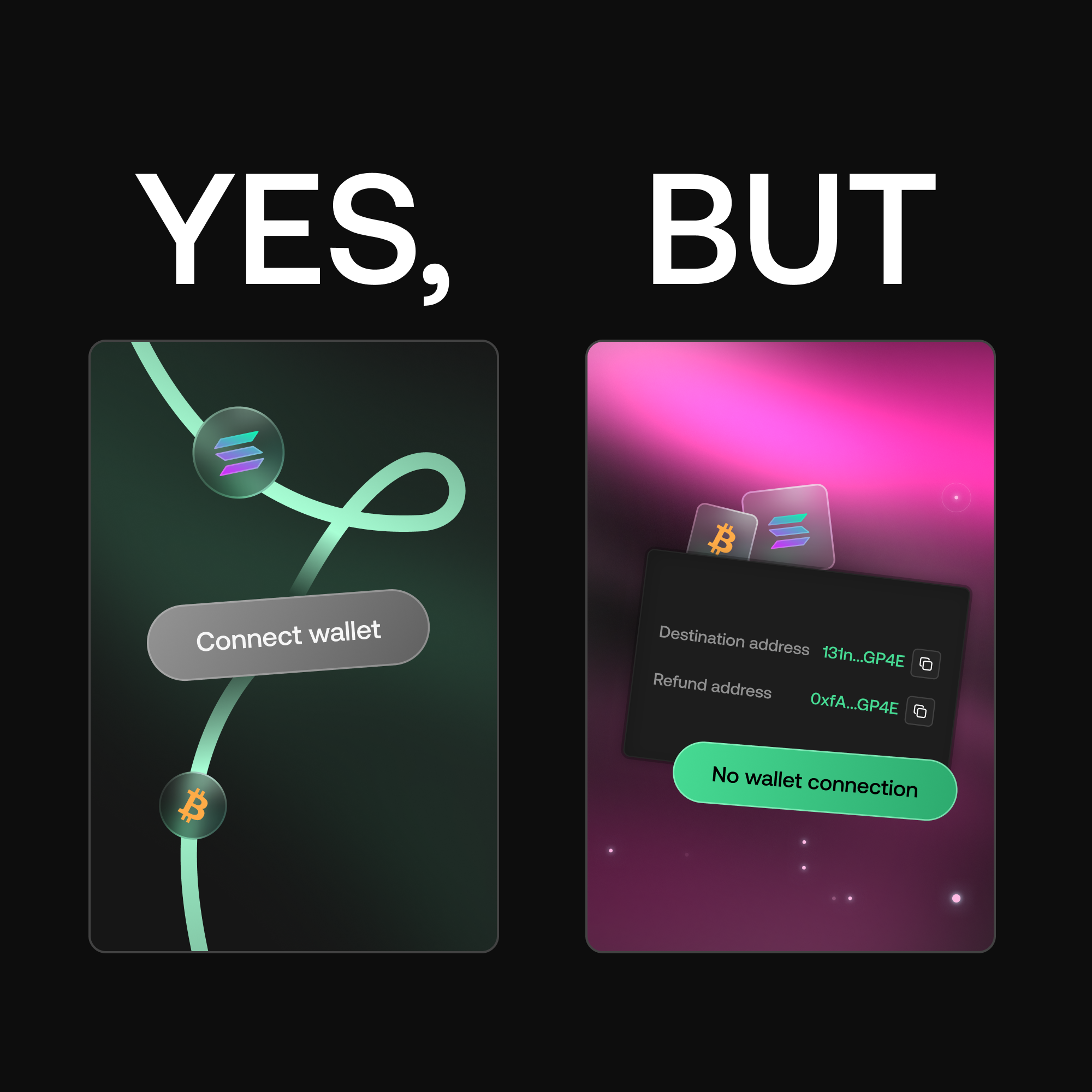
Start with a small amount. Observe the confirmation times at each stage. Check the transaction on block explorers. The process is more intuitive than the technical description suggests.
Cross-chain swaps have matured from experimental technology to reliable infrastructure. Understanding how they work under the hood helps you trust the process and recognize which protocols have built genuinely secure systems.
Resources
- Swap Now - Start swapping native assets
- Lend BTC - Borrow against native Bitcoin
- Blog - Product updates and announcements
- Chainflip Scan - Track swaps and network activity
- Website - Explore Chainflip
Other Chainflip Products:
- Boost - Earn fees by providing single-sided liquidity with no IL risk
- Stablecoin Strategies - Deposit stablecoins and earn optimized yields
- Provide Liquidity - Supply assets to Chainflip's liquidity pools
- Stake FLIP - Delegate FLIP and earn staking rewards
Find us:
Frequently Asked Questions
How long does a cross-chain swap take?
Swap times depend primarily on the source chain's confirmation requirements. Bitcoin swaps typically take 10-30 minutes due to block confirmation times. Swaps between faster chains like Solana and Arbitrum complete in under a minute.
What happens to my funds during a cross-chain swap?
Your funds are held in vaults secured by validators using threshold signatures. No single party can access them. The protocol executes the swap through internal liquidity pools, then sends the output to your destination address.
Can a cross-chain swap fail partway through?
Cross-chain swaps are designed to be atomic. If any stage fails, the swap reverses and funds return to their origin. You won't end up in a state where you've lost one asset without receiving the other.
Why do different assets have different confirmation times?
Each blockchain has different security assumptions. Bitcoin's 10-minute blocks require waiting for multiple confirmations to ensure transaction finality. Faster chains with different consensus mechanisms can confirm transactions in seconds.
How do liquidity providers earn from cross-chain swaps?
Liquidity providers deposit assets into pools and receive a share of the fees from every swap that uses their liquidity. The fee percentage varies by protocol and trading pair.