
How to Swap Crypto Without KYC on Chainflip
Swap crypto across chains on Chainflip without creating an account or verifying your identity. No KYC, no wallet connection required, just a destination address.

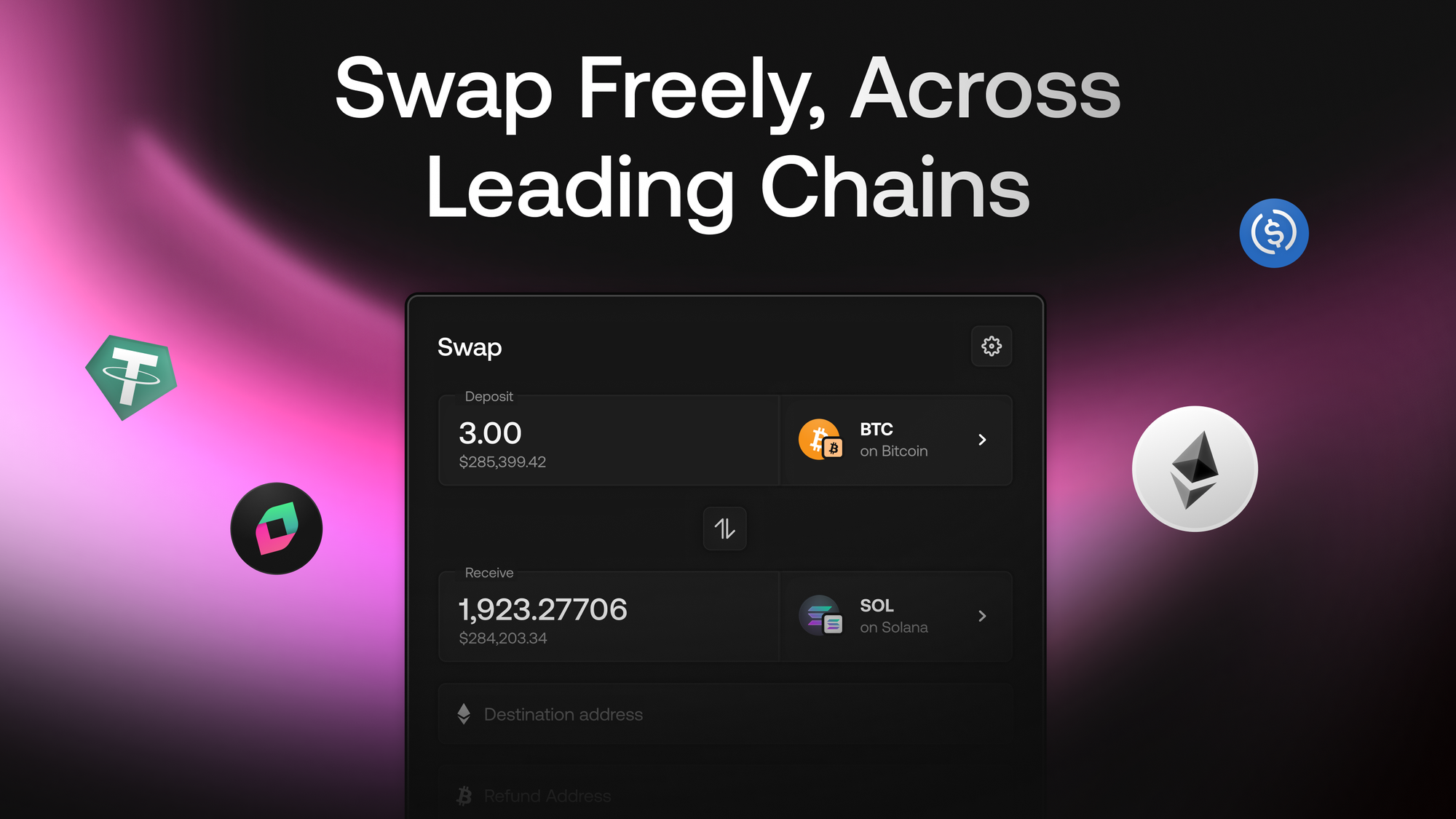
Most crypto exchanges require identity verification before you can trade. Chainflip doesn't. You connect a wallet, enter a destination address, and swap. No account, no KYC, no waiting for approval.
Why KYC is standard on exchanges (and what changes without it)
Centralized exchanges collect identity documents to comply with anti-money laundering regulations in their jurisdictions. That's a reasonable trade-off for some users, but it means storing personal data with a third party, waiting days for verification, and creating a permanent link between your identity and your on-chain activity.
Chainflip is a decentralized protocol. There's no company holding your funds during a swap, no centralized custodian, and no account system to attach an identity to. Swaps are executed by the protocol itself, with assets secured by validators across the network.
What you can swap on Chainflip
Chainflip supports native asset swaps across multiple chains, including Bitcoin, Ethereum, Solana, and others. You're swapping the actual assets, native BTC to native ETH, for example, not wrapped tokens or IOUs.
A full list of supported assets is available at swap.chainflip.io. The protocol adds new chains and assets through governance, so the list expands over time.
How a Chainflip swap works
The process is straightforward:
- Go to swap.chainflip.io
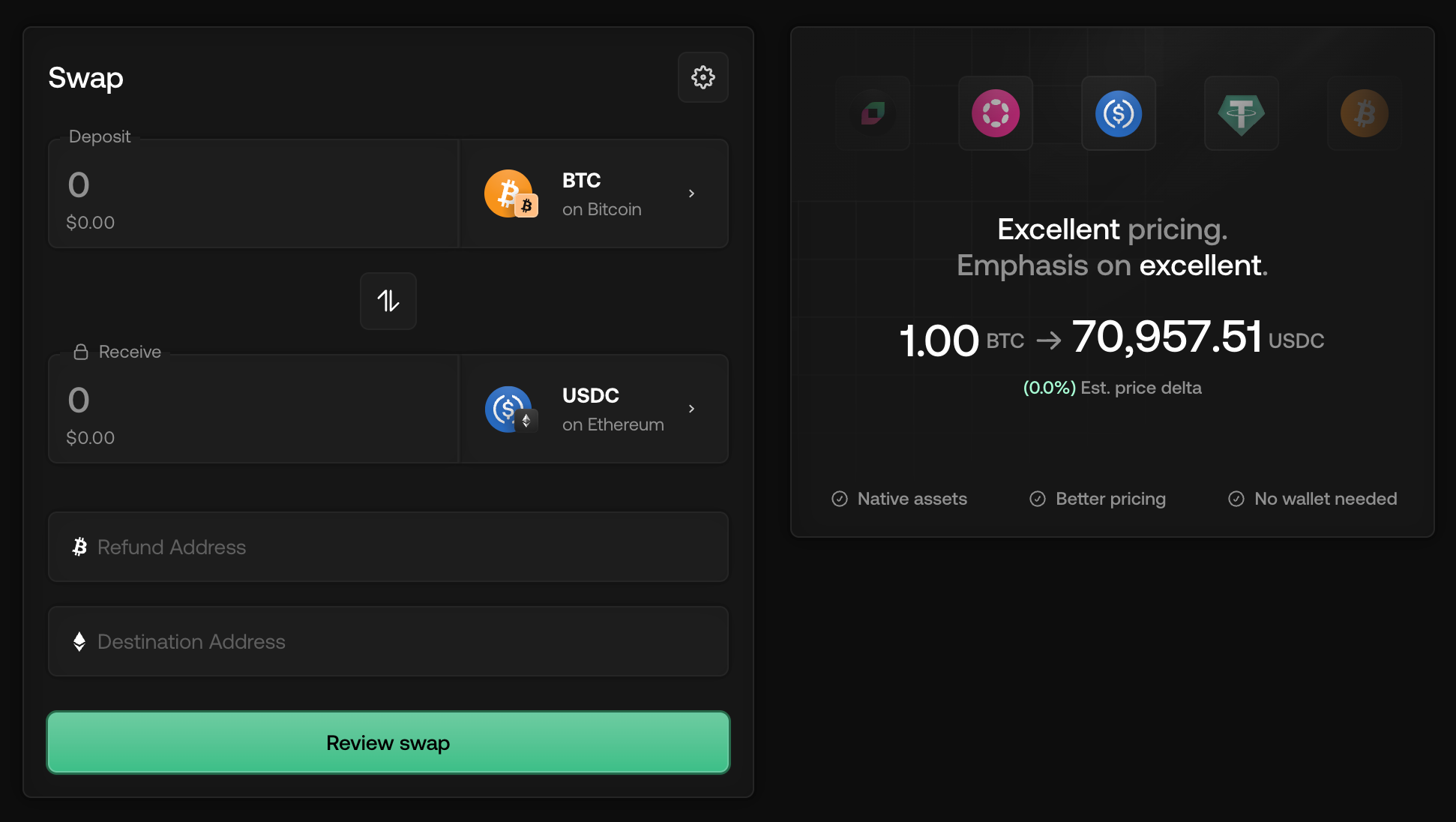
- Select the asset you're sending and the asset you want to receive
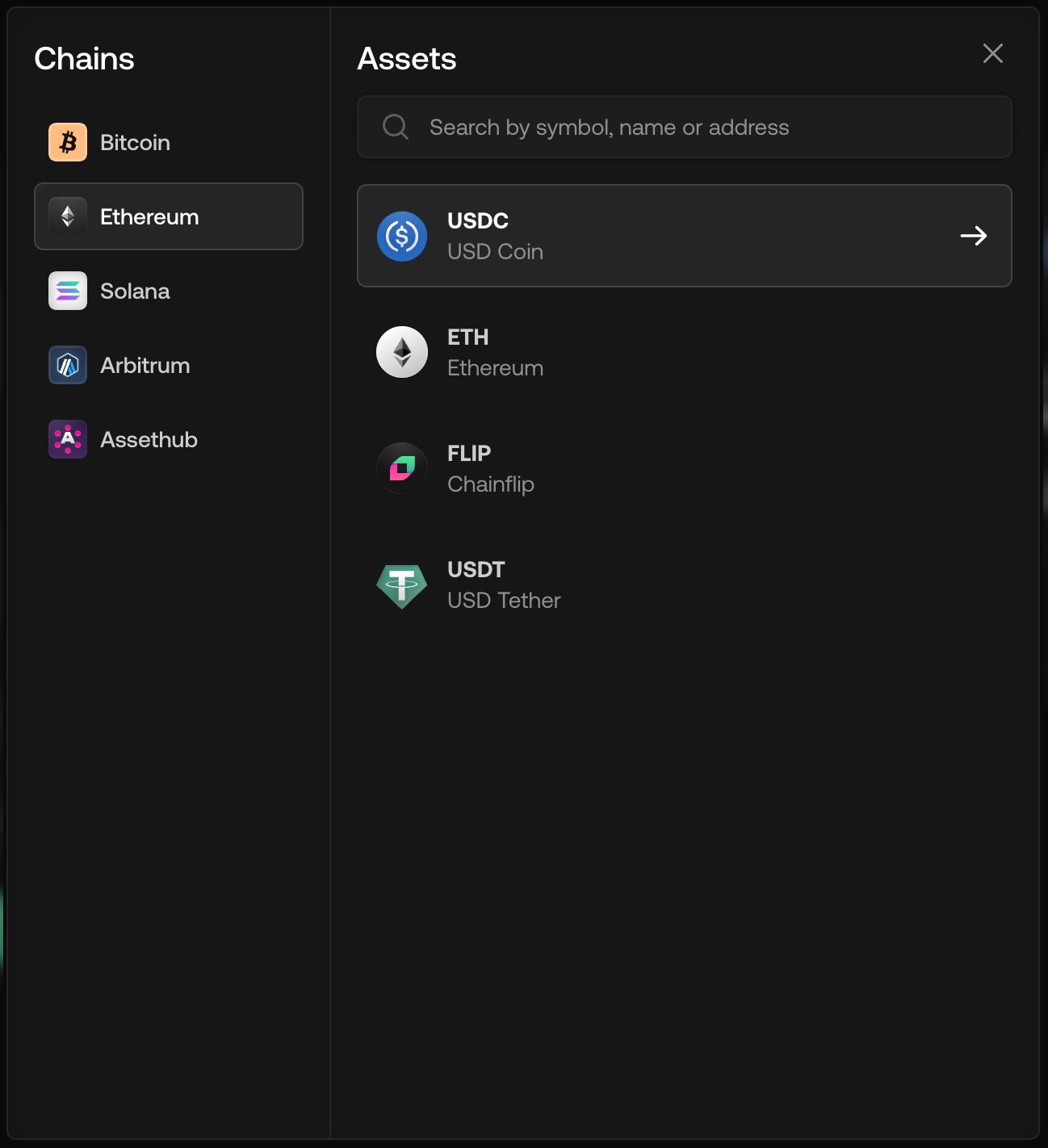
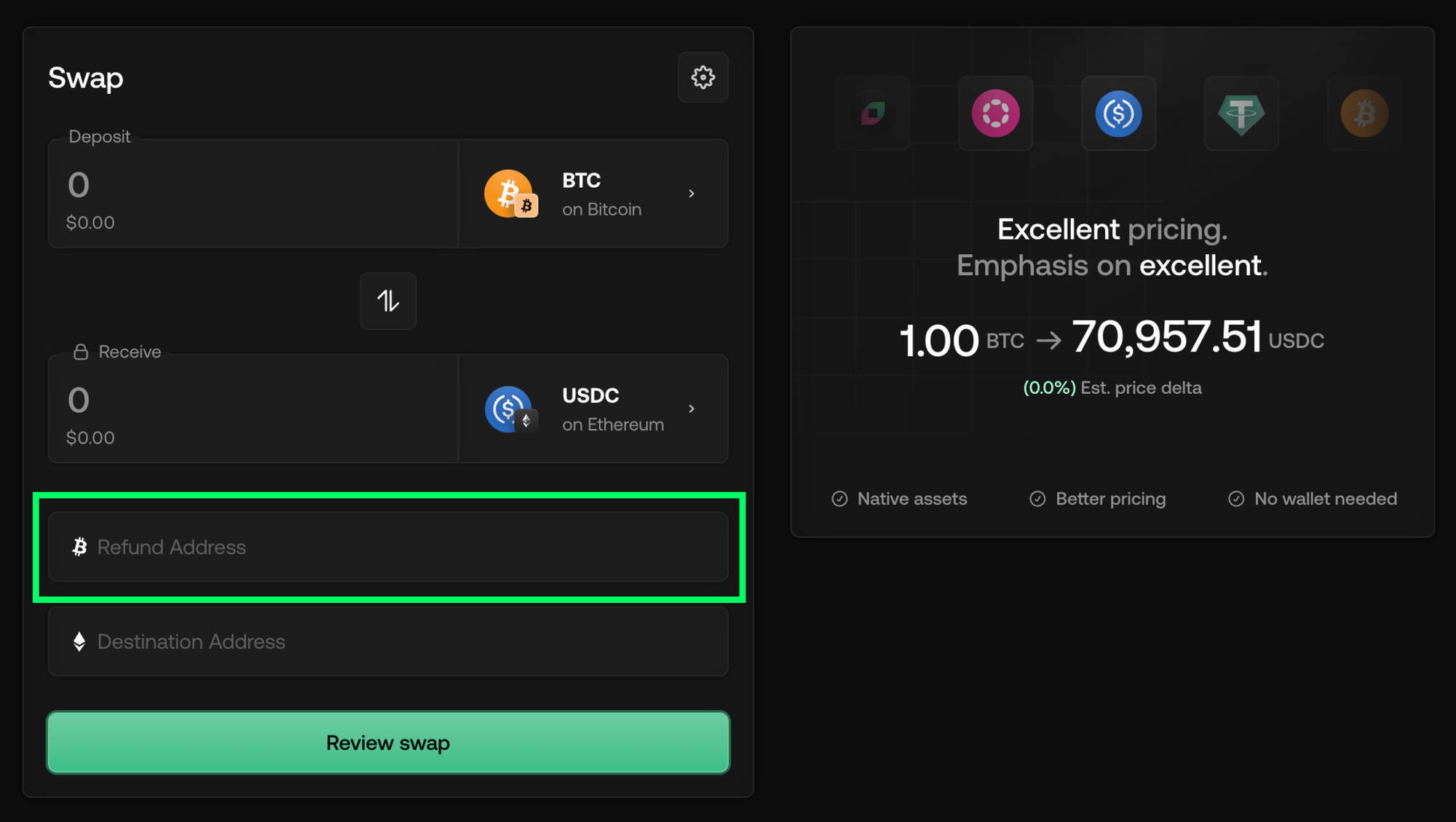
- Enter your Refund wallet address
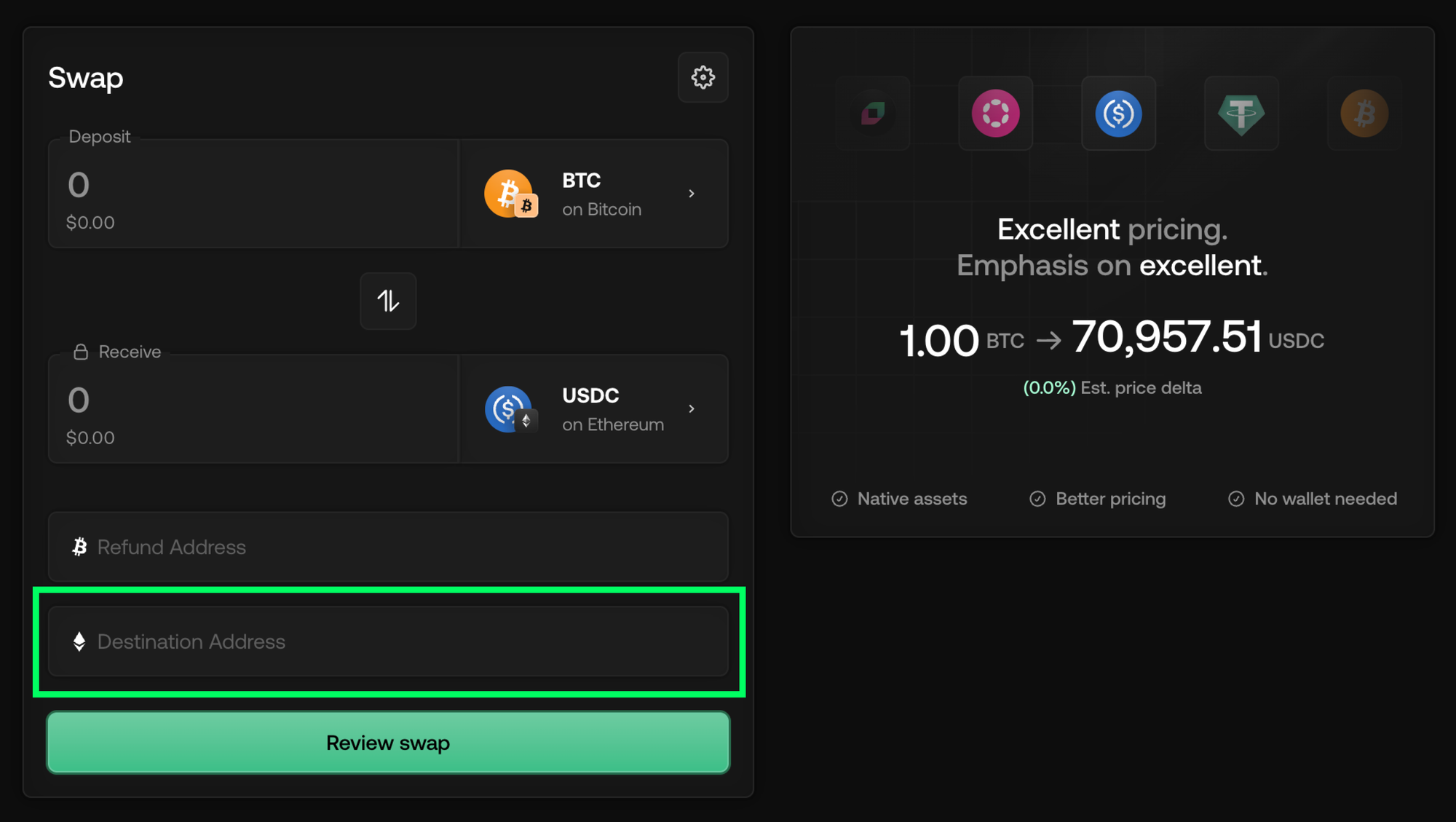
- Enter your Destination wallet address
- Chainflip generates deposit channel.
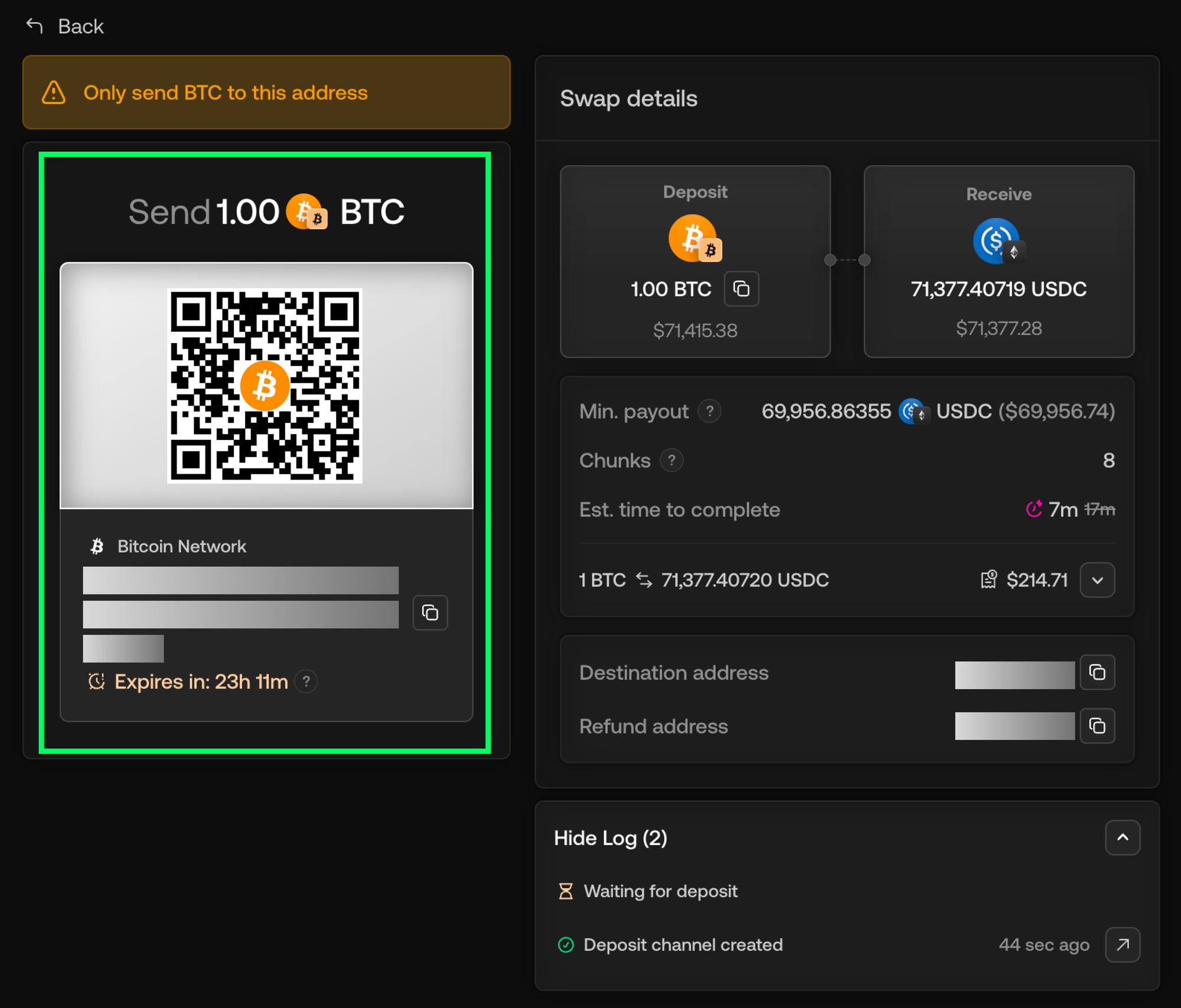
- Send your funds to the deposit address the protocol generates. Here you can easily initiate a swap from any wallet, hardware wallets, multisigs, exchange withdrawals, without connecting it to the interface.
- Receive your output asset at the address you provided
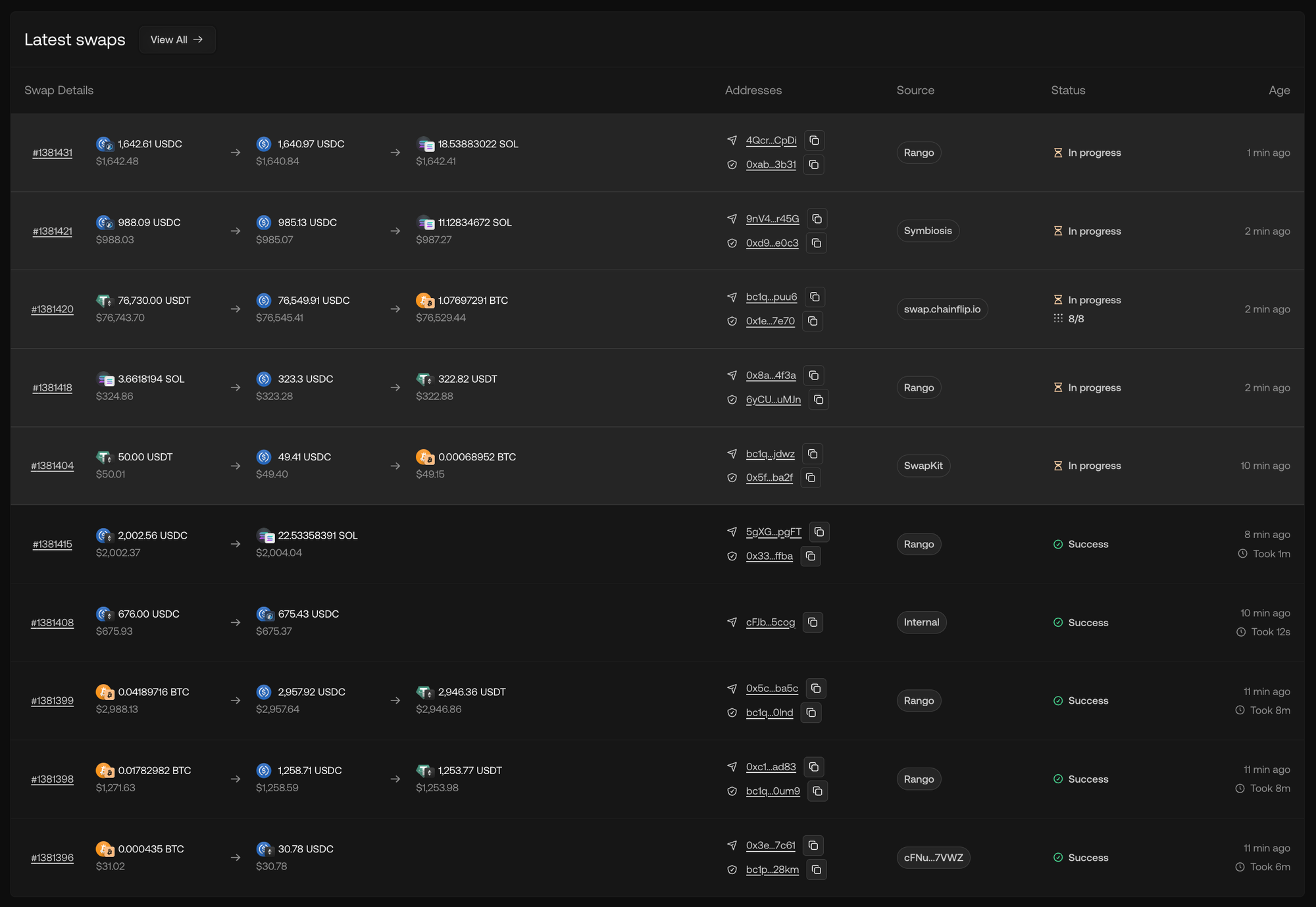
No wallet connection is required to initiate a swap. You only need a destination address for the output asset. The protocol generates a unique deposit address for each swap. Once you send funds to that address, the swap executes automatically. You can track its status on Chainflip Scan.
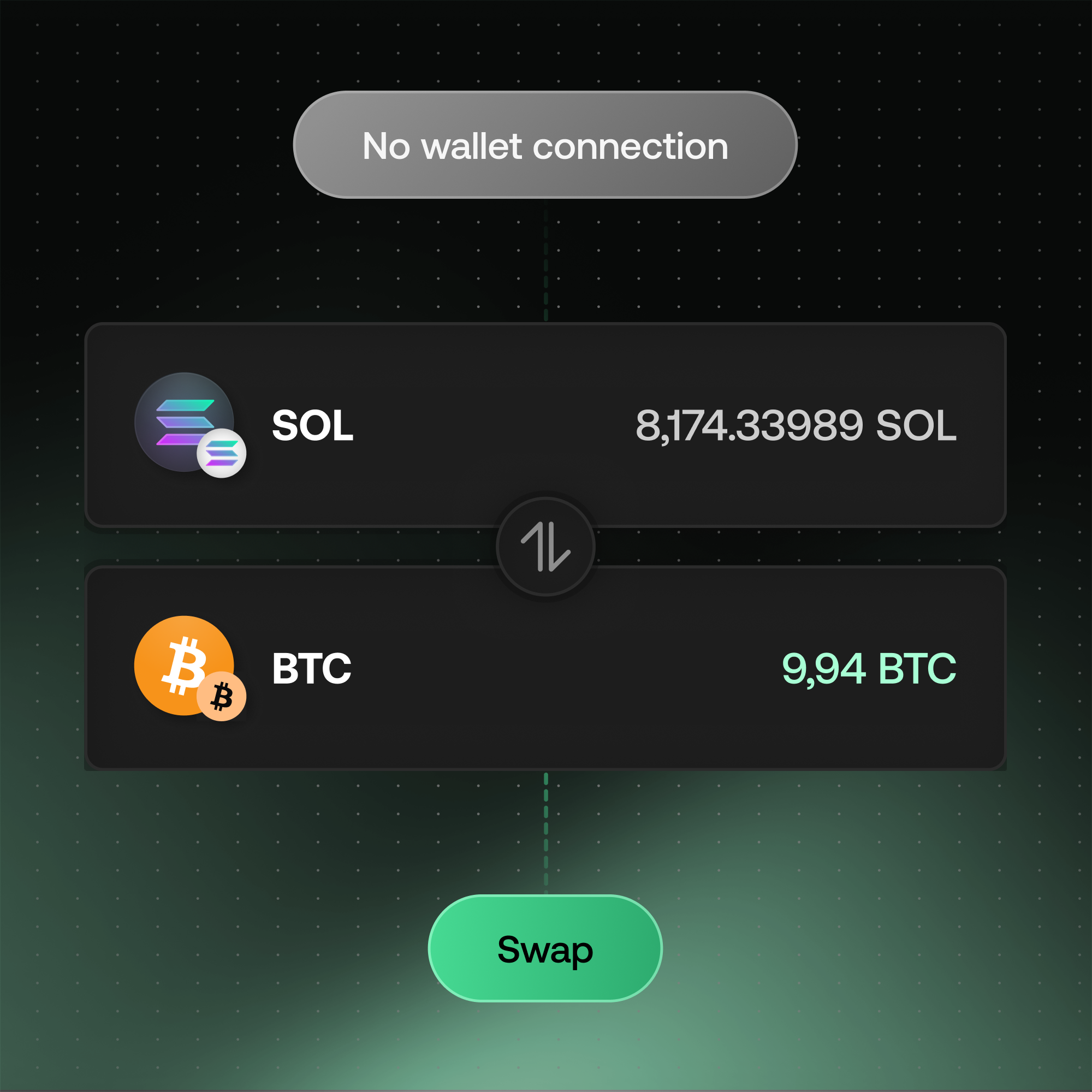
No wallet connection required
Most DeFi protocols require you to connect a wallet to interact with them. Chainflip doesn't. Because the swap is triggered by sending funds to a deposit address, you can initiate a swap from any wallet, hardware wallets, multisigs, exchange withdrawals, without connecting it to the interface.
This is particularly useful if you're swapping from cold storage. You generate the deposit address, send from your hardware wallet, and receive the output at whatever address you specify.
How custody works during a swap
During a swap, your funds are held in deposit channels controlled by the Chainflip protocol. There's no centralized custodian with access to those funds. The decentralized custody model relies on a network of validators who collectively manage the vaults through threshold signature schemes.
This is different from a centralized exchange, where the company holds your funds in their wallets and you trust them to send the right amount to the right place.
Fees and pricing
Chainflip charges a protocol fee on each swap, plus network fees for the chains involved. The interface shows you the estimated output before you send, so you can see exactly what you'll receive.
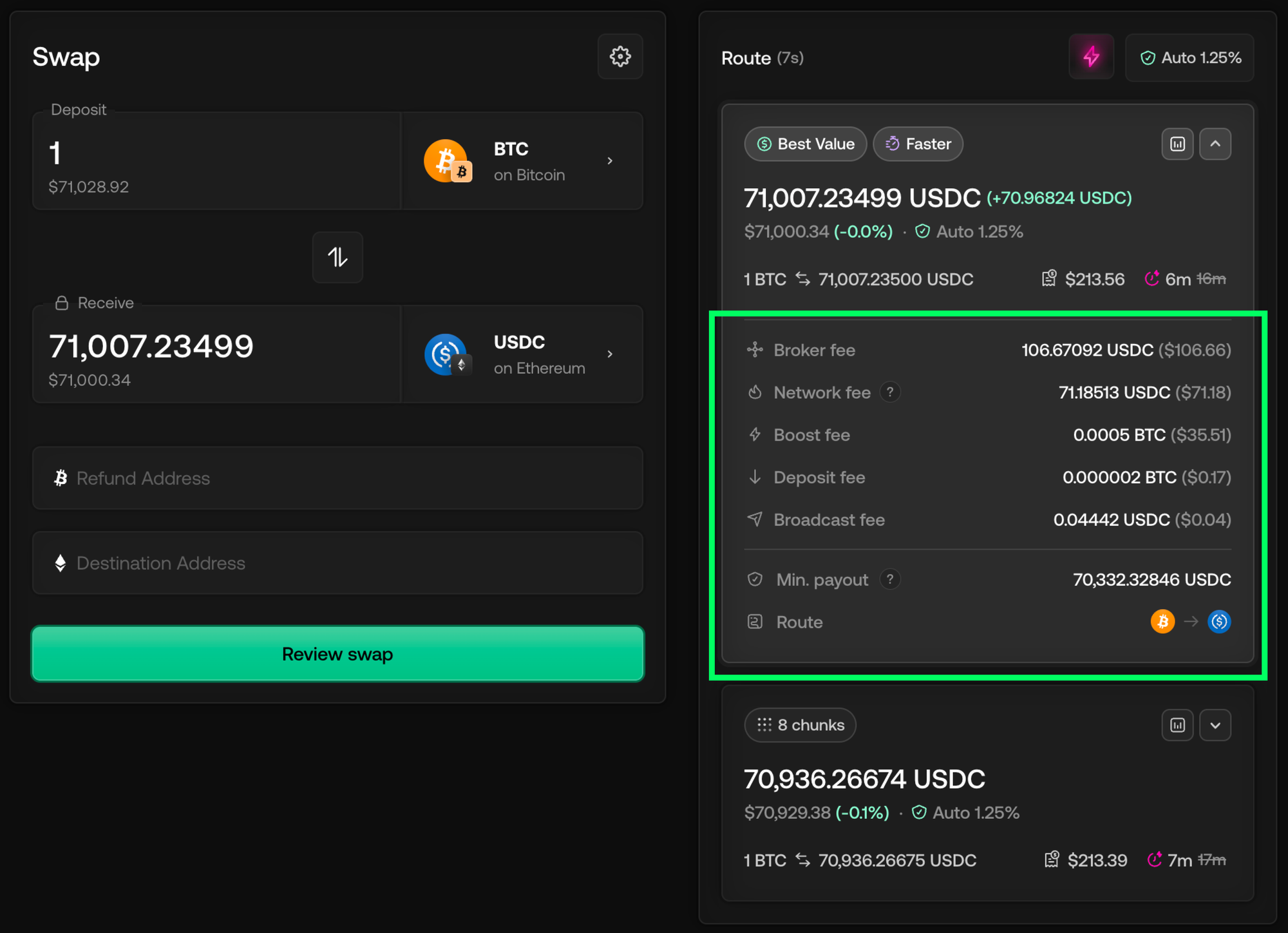
For large swaps, the output estimate reflects available liquidity in the pools. Thinner liquidity on a given pair will result in more price impact, visible in the interface before you commit.
Comparing KYC-free swap options
Several protocols offer KYC-free swaps, but they differ in what they actually support. Most DEXs operate within a single chain or require wrapped assets for cross-chain trades. Chainflip handles native cross-chain swaps, you send actual BTC and receive actual ETH, with no wrapping step required on your end.
Atomic swap services also avoid custodians, but they require the counterparty to be online and have limited asset support. Chainflip uses liquidity pools rather than peer-to-peer matching, so swaps execute against available liquidity rather than waiting for a counterparty.
Start swapping
You can start a swap at swap.chainflip.io with no sign-up required. If you want to track a swap after sending, head to Chainflip Scan and paste your deposit address or transaction hash.
For questions, the Chainflip Discord / Telegram is the fastest place to get support.
Resources
- Swap Now - Start swapping native assets
- Lend BTC - Borrow against native Bitcoin
- Blog - Product updates and announcements
- Chainflip Scan - Track swaps and network activity
- Website - Explore Chainflip
Other Chainflip Products:
- Boost - Earn fees by providing single-sided liquidity with no IL risk
- Stablecoin Strategies - Deposit stablecoins and earn optimized yields
- Provide Liquidity - Supply assets to Chainflip's liquidity pools
- Stake FLIP - Delegate FLIP and earn staking rewards
Find us:
- Discord - Join the Chainflip community
- Telegram - Get the latest Chainflip updates
- X - Follow Chainflip on X
- LinkedIn - Chainflip on LinkedIn
- YouTube - Chainflip tutorials and explainers
- Threads - Follow Chainflip on Threads
- Bluesky - Follow Chainflip on Bluesky
Frequently asked questions
Does Chainflip require KYC?
No. Chainflip is a decentralized protocol with no account system. You don't need to verify your identity to swap.
Do I need to connect a wallet to swap on Chainflip?
No. You only need a destination address for the output asset. You send funds directly to a deposit address generated by the protocol.
What assets can I swap on Chainflip?
Chainflip supports native assets across Bitcoin, Ethereum, Solana, and other supported chains. You can see the full list at swap.chainflip.io.
Who holds my funds during a swap?
Your funds are secured by Chainflip's validator network using a decentralized custody model. There is no centralized custodian with access to your assets.
Can I swap from a hardware wallet?
Yes. Because Chainflip generates a deposit address, you can send from any wallet, including hardware wallets, without connecting it to the interface.