
What is a Native Swap? Native Bitcoin Swaps Explained: Swap BTC without wrapping or CEX
Most BTC in DeFi is not real Bitcoin. Here is what a native swap actually is, and how to move BTC cross-chain without wrapping, custodians, or a CEX.

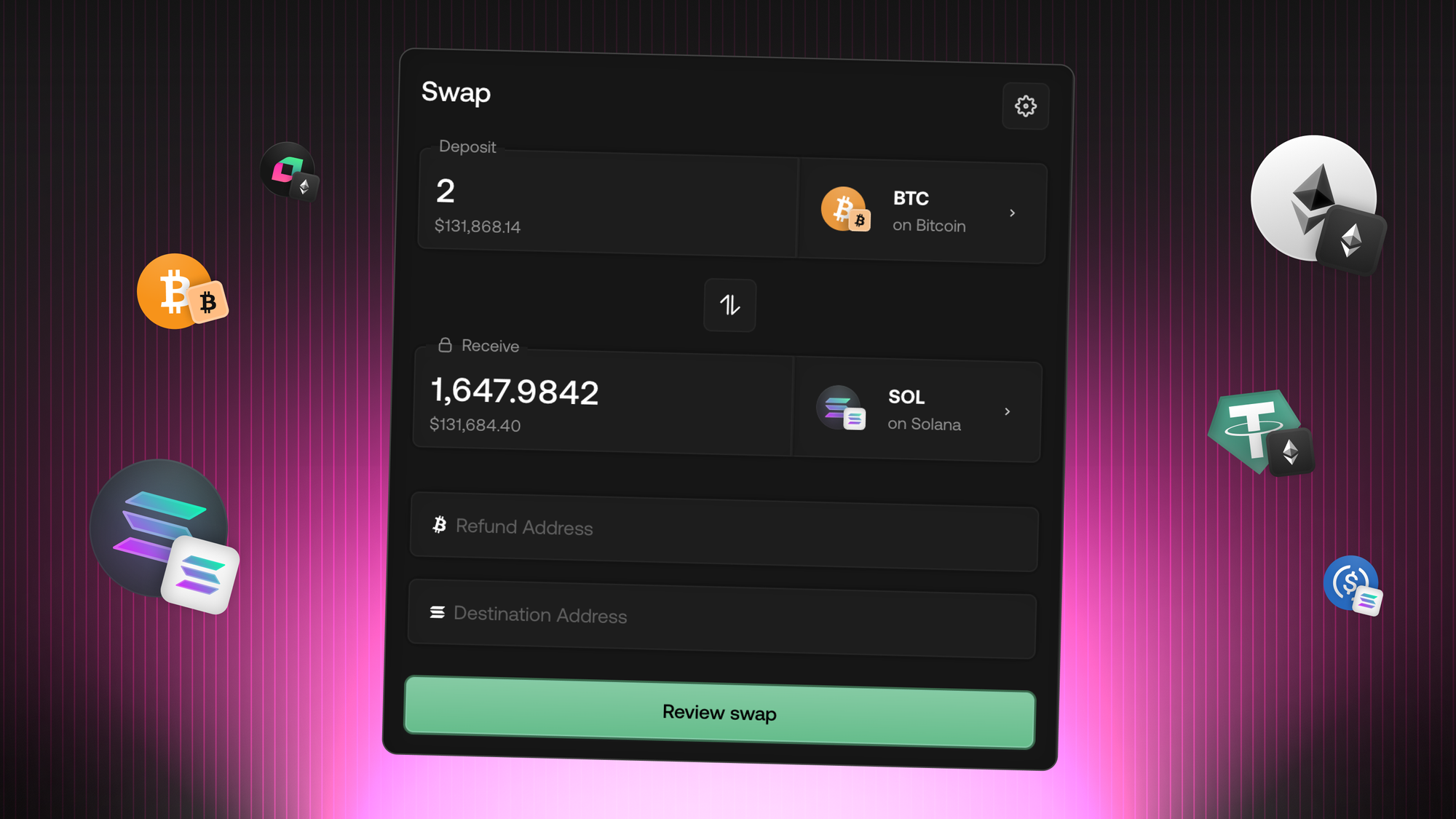
A native swap moves real, on-chain assets between blockchains without converting them into a wrapped or synthetic version first. If you have ever searched for how to swap Bitcoin cross-chain, buy BTC without KYC, or trade BTC in DeFi without a centralized exchange, native swaps are the answer.
The Problem Cross-Chain Swaps Solve
Blockchains do not talk to each other. Bitcoin has no way to natively communicate with Ethereum, Solana, or any other chain. If you hold BTC and want to access DeFi, buy a stablecoin, or move value to another network, you traditionally had two options: sell through a centralized exchange and hand over custody, or use a bridge and receive a wrapped token that someone else is promising to honor.
Cross-chain swaps offer a third path. Move value between blockchains directly, without selling through a CEX or minting a synthetic token. The asset leaves one chain and arrives on another. No account required, no wrapped version involved.
Why Cross-Chain Swaps Are Hard to Get Right
The core challenge is that no blockchain has visibility into what happens on another. Ethereum cannot verify a Bitcoin transaction. Bitcoin cannot read an Ethereum smart contract. Something has to bridge that gap, and historically that something has been a custodian, a multisig, or a bridge contract, all of which introduce a point of failure.
Bitcoin makes this harder than most. Unlike assets on programmable chains, BTC cannot be represented in a smart contract without wrapping. This is why most solutions default to wBTC or similar tokens. Solving it properly requires a protocol that can custody Bitcoin securely without centralizing control, coordinate across chains without a single operator, and settle trades so neither party is exposed mid-swap.
What Makes a Swap "Native"?
Most cross-chain swaps and BTC trading routes rely on wrapped tokens. When you bridge BTC to Ethereum, you typically receive wBTC or cbBTC. These are IOUs backed by a custodian. They are not Bitcoin.
Think of it like exchanging cash for casino chips. The chips represent your money, but you can only spend them inside, and you need to trust the house to give your cash back when you leave. Wrapped tokens work the same way.
A native swap skips the chip desk entirely. You send BTC from any Bitcoin wallet. The recipient address receives BTC. Nothing is wrapped, minted, or pegged along the way. This applies whether you are swapping BTC to ETH, BTC to SOL, or moving Bitcoin liquidity across any supported chain.
How Chainflip Enables Native Bitcoin Swaps
Chainflip uses a decentralized vault architecture secured by a validator network. Validators collectively custody assets using threshold signature schemes (TSS), meaning no single party controls funds. This is crypto-economic security in practice, not a promise.
When a cross-chain swap is initiated, the protocol routes liquidity through Chainflip's AMM, settles the trade on-chain, and releases native assets directly to the destination address. There is no centralized intermediary involved in the process.
This differs from most cross-chain protocols, which rely on bridge contracts, multisigs with small signer sets, or centralized custodians to hold assets in transit. For anyone comparing native BTC swaps vs bridged BTC, the custody model is the key distinction.
Why Native Matters for Bitcoin Specifically
Bitcoin has no smart contracts. It cannot be natively represented on other chains without some form of wrapping. This is why most "BTC" in DeFi is actually a tokenized version of Bitcoin, according to data tracked by DefiLlama.
Native BTC swaps on Chainflip allow users to move in and out of Bitcoin without touching wrapped versions. Whether you are exchanging Bitcoin for stablecoins, swapping crypto peer-to-peer, or looking for the best way to trade BTC without a CEX, you keep exposure to actual Bitcoin throughout the transaction.
What About wBTC on Chainflip?
Wrapped Bitcoin is coming to Chainflip. WBTC support is on the roadmap, and when live, users will be able to swap between native BTC and its wrapped equivalent directly through the protocol.
This matters for two reasons. First, it gives users who already hold wBTC on Ethereum a direct exit route back to native Bitcoin without routing through a centralized exchange. Second, it deepens Bitcoin liquidity on Chainflip, improving rates for all BTC-related swap pairs.
Native BTC remains the default for users who want to move actual Bitcoin across chains. Wrapped variants serve a different use case, primarily for DeFi protocols on Ethereum that require an ERC-20 token. Chainflip will support both.
What You Can Do with Native Bitcoin on Chainflip
Beyond swapping, Chainflip's Native BTC Lending product (launched February 4, 2026) lets you borrow against native Bitcoin collateral without selling your BTC. The Bitcoin stays validator-custodied throughout. No conversion required. For holders looking to access liquidity against their BTC position without triggering a taxable sale, this is a direct alternative to selling on a centralized exchange.
Resources
Get Started
- Swap Now - Start swapping native assets
- Lend BTC - Borrow against native Bitcoin
- Chainflip Scan - Track swaps and network activity
- Blog - Product updates and announcements
- Website - Explore Chainflip
Other Chainflip Products
- Boost - Earn fees with single-sided liquidity and no IL risk
- Stablecoin Strategies - Deposit stablecoins and earn optimized yields
- Provide Liquidity - Supply assets to Chainflip's liquidity pools
- Stake FLIP - Delegate FLIP and earn staking rewards
Find Us
- Discord - Join the Chainflip community
- Telegram - Get the latest Chainflip updates
- X - Follow Chainflip on X
- LinkedIn - Chainflip on LinkedIn
- YouTube - Chainflip tutorials and explainers
- Bluesky - Follow Chainflip on Bluesky
- Threads - Follow Chainflip on Threads
FAQ
What is the difference between a native swap and a bridge?
A bridge typically wraps assets into synthetic tokens held by a custodian. A native swap moves the actual asset between chains with no wrapping or minting involved.
Is native BTC on Chainflip the same as my actual Bitcoin?
Yes. You send BTC from your Bitcoin address, and the counterparty receives BTC to their Bitcoin address. Chainflip's validators custody assets in transit using threshold signatures.
Can I swap BTC to ETH, SOL, or stablecoins natively?
Yes. Chainflip supports native BTC swaps to and from multiple assets across Ethereum, Solana, and other supported chains. You can also swap directly to USDC or USDT without going through a CEX.
Is there a centralized custodian holding my BTC during a swap?
No. Assets are secured by Chainflip's validator set using crypto-economic security. No single party or centralized custodian controls funds at any point.