
Q4 2025 Report: Protocol Performance, Product Momentum, and the Shift to Multi-Product Liquidity Infrastructure

Executive Summary
Q4 2025 was a breakout quarter for Chainflip. The protocol delivered record swap volumes, network fee generation, and FLIP burn, while simultaneously launching major product capabilities that extend Chainflip beyond swaps into native lending and capital efficiency products.
Across volume, usage, and economic value capture, Q4 set new all-time highs. The quarter also marked a substantial reduction in onboarding friction via EVM wallet support for liquidity providers, and ongoing expansion of the protocol’s distribution footprint through deep integrations with wallets, aggregators, and cross-chain routing stacks.
Taken together, these developments demonstrate that Chainflip’s growth continues to be usage-driven, technically robust, and product-rich, setting the stage for accelerated adoption in 2026.
Q4 by the Numbers
Q4 delivered growth across every core metric:
- Total swap volume: $1.69B
- Number of swaps: 163,356 (& ATH in December)
- Network fees: $994K
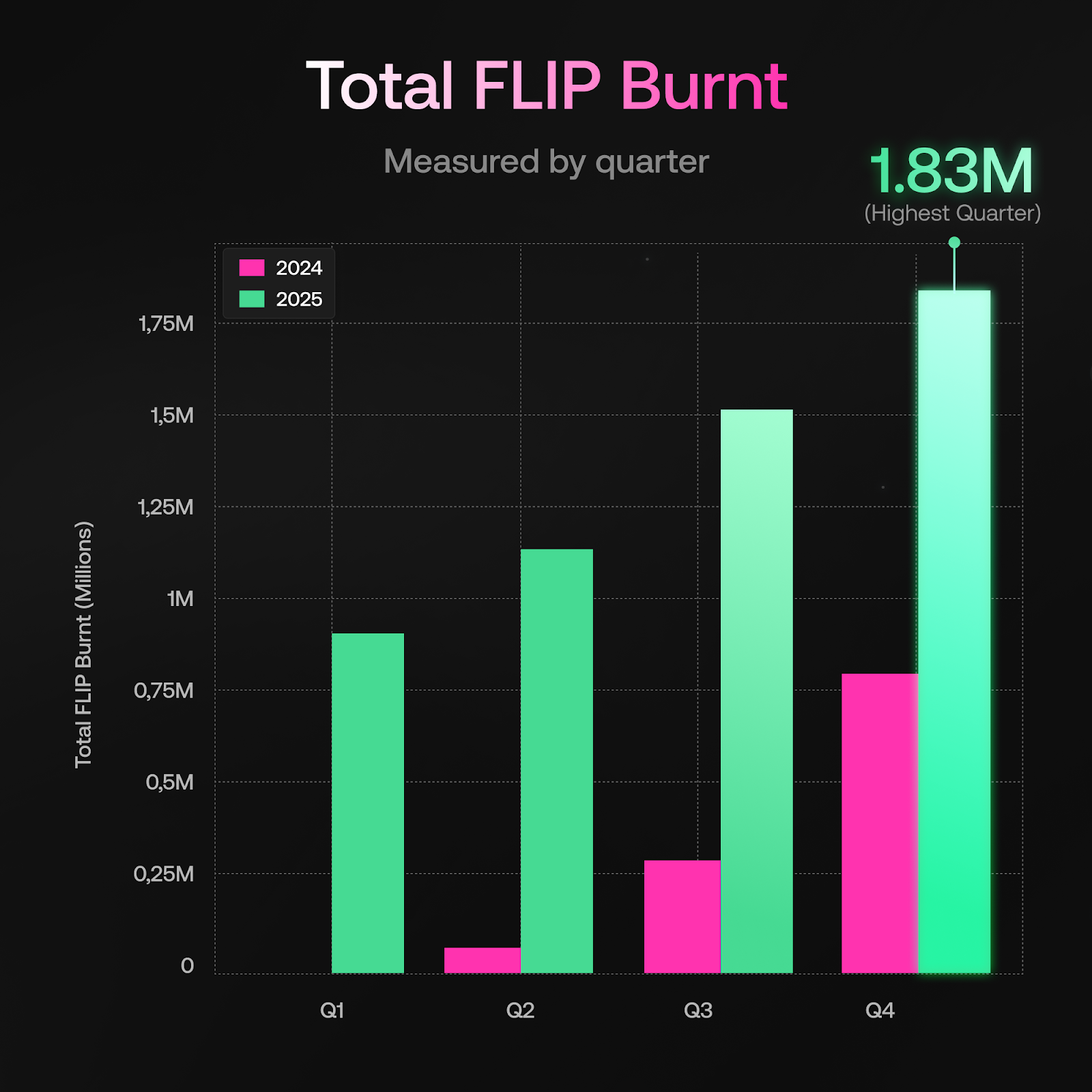
- FLIP burned: 1.83M FLIP
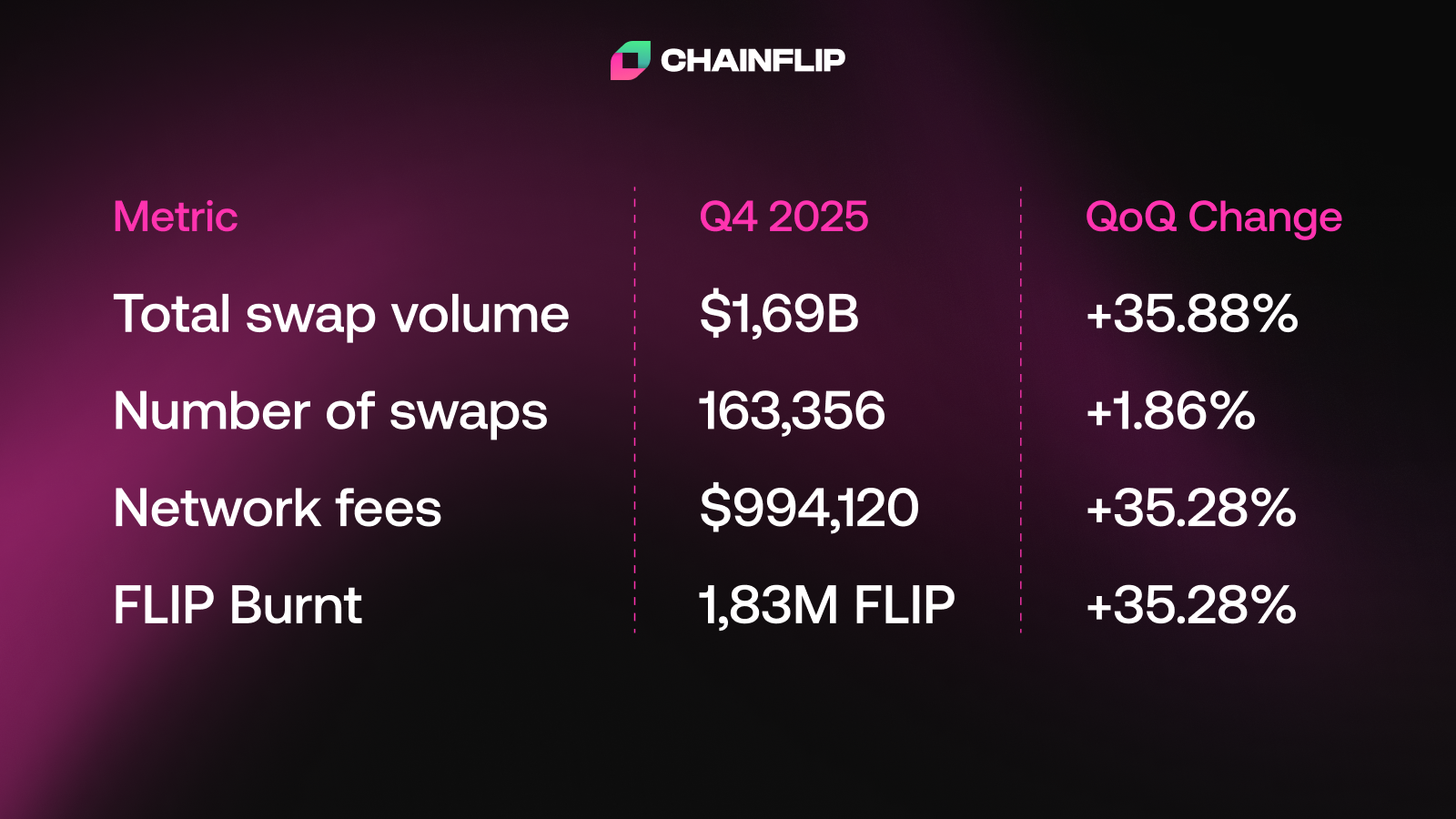
Each of these metrics increased quarter-over-quarter, with volume, fees, and burn all scaling in parallel. Together, they provide a clear picture of sustained demand, improving capital efficiency, and usage-driven value accrual.
Total Swap Volume
Total swap volume reached $1.69B in Q4 2025, representing a +35.9% increase quarter-over-quarter and the highest quarterly volume ever recorded by the protocol to date.
Each quarter in 2025 materially outperformed the corresponding quarter in 2024, underlining that growth was not seasonal or one-off, but structural. Demand for native BTC and SOL routes remained strong throughout the quarter, supported by deeper liquidity and broader access via new wallet and aggregator integrations.

Network Fees
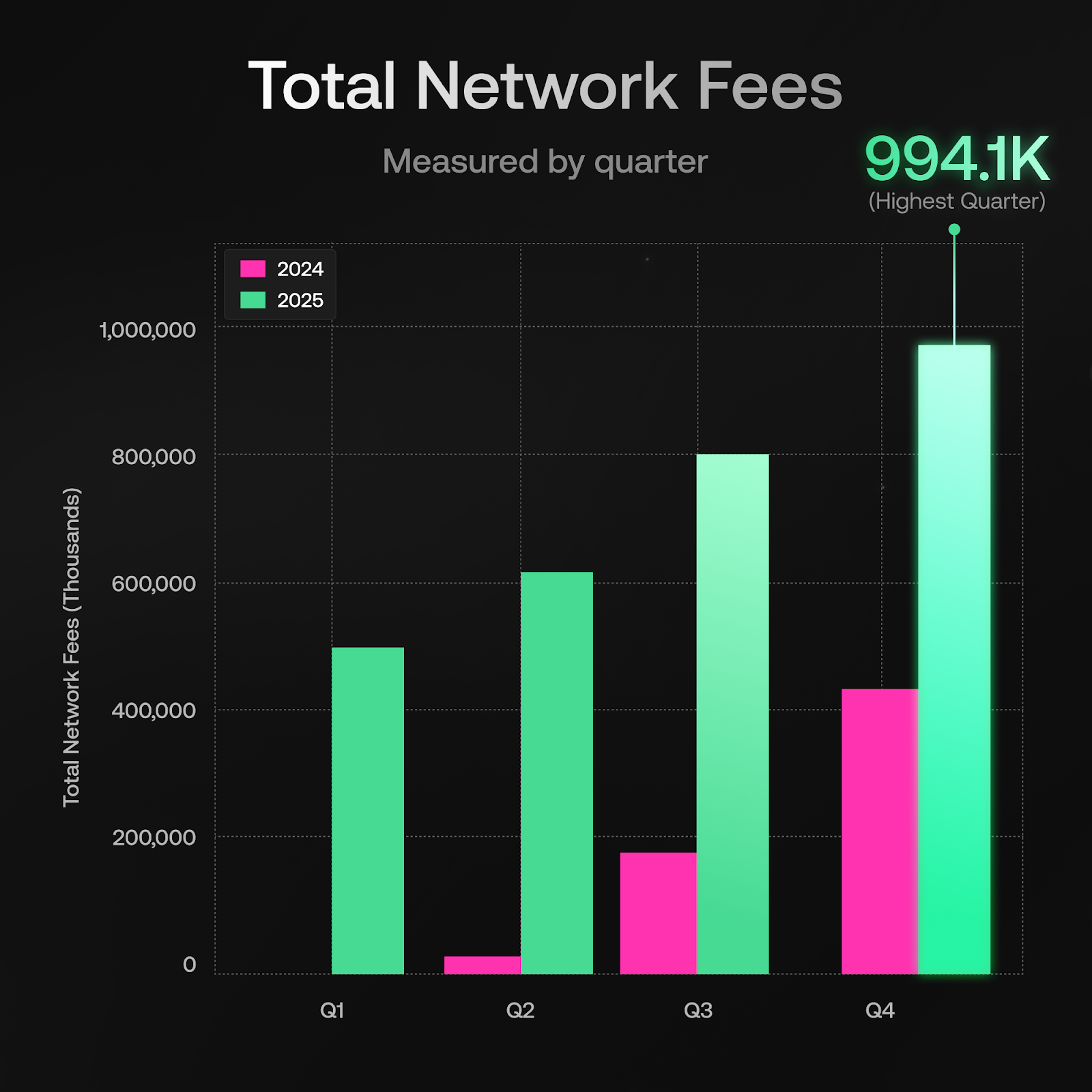
Network fees totalled $994K in Q4, marking the highest revenue-generating quarter in Chainflip’s history.
Fee growth closely tracked the increase in swap volume, demonstrating that protocol usage continues to convert cleanly into economic throughput. Importantly, this growth was driven by organic activity rather than temporary incentive programs, reinforcing the sustainability of Chainflip’s revenue model.
Protocol Financials and Earnings
Beyond topline volume and fee growth, Q4 2025 also marked a meaningful shift in Chainflip’s financial profile.
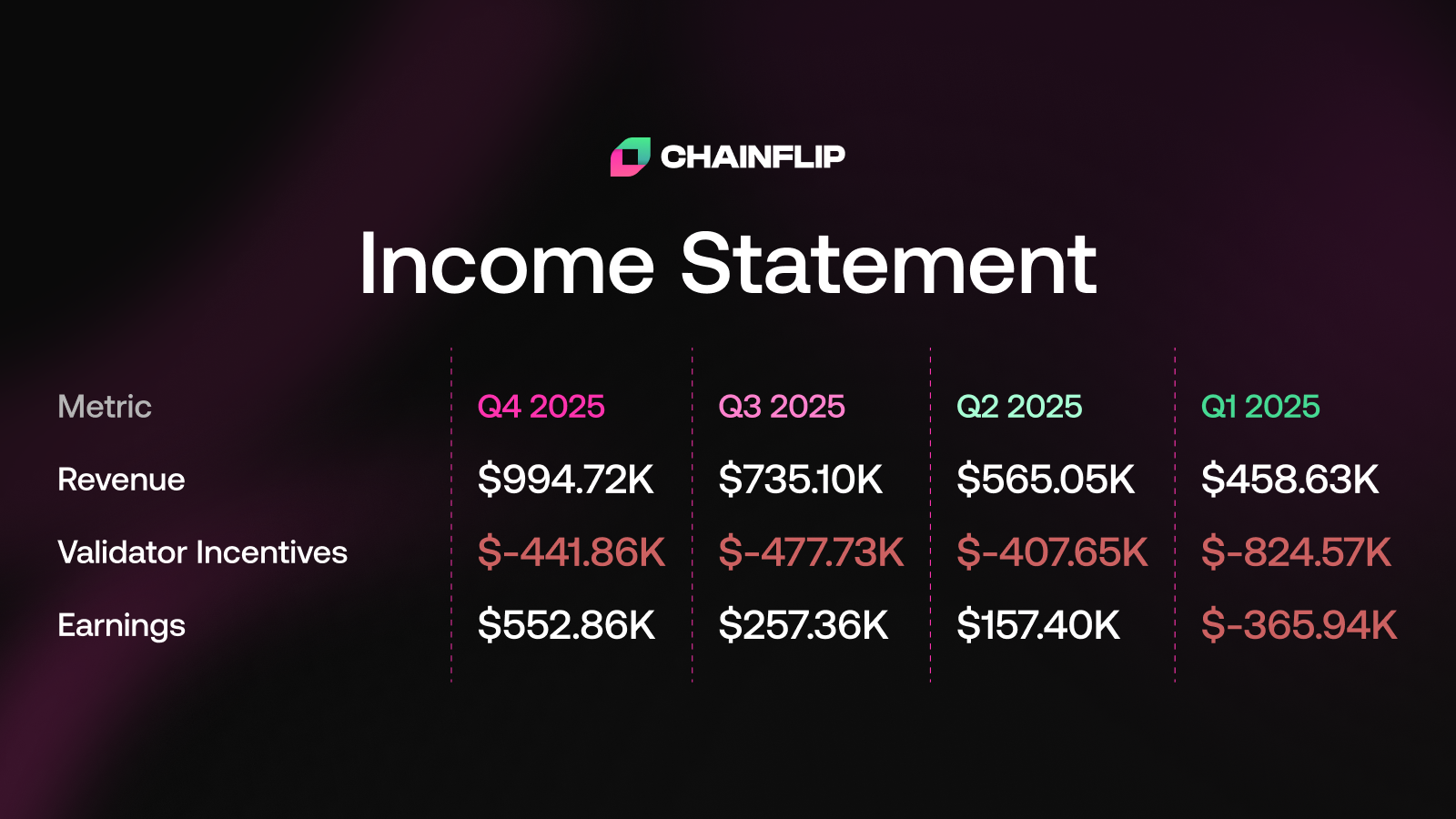
Q4 generated $994.7K in revenue, the highest quarterly revenue recorded to date. Validator incentives totalled $441.9K, resulting in net protocol earnings of $552.9K (+114.8% QoQ) for Q4. This represents a significant improvement over prior quarters and reflects both rising fee throughput and a more efficient incentive structure.
Throughout 2025, protocol earnings progressed from negative territory in Q1 to consistently positive results in the second half of the year. By Q4, earnings had more than doubled quarter-over-quarter, highlighting a clear transition from growth-oriented incentives toward sustainable, usage-backed profitability.
These earnings directly underpin Chainflip’s buyback and burn mechanism. As protocol revenue increases, a growing portion of value is systematically recycled into FLIP market purchases, creating induced demand that is mechanically tied to real network activity rather than discretionary decisions.
As a result, Chainflip’s financial performance is no longer best understood purely through volume metrics alone, but through its ability to convert usage into earnings, buybacks, and long-term value accrual for the network.
FLIP Burn
A total of 1.83M FLIP were burned in Q4 2025, marking the highest quarterly burn since launch.
FLIP burn scaled consistently alongside network fees throughout the quarter, reflecting the protocol’s fee-to-burn mechanism operating as designed. As swap activity increased, protocol fees turned into market buybacks, creating persistent, usage-driven demand for FLIP.
This mechanism introduces a structural bid for the token that is directly linked to real protocol usage. Rather than relying on discretionary incentives or external demand, FLIP buybacks are triggered by network activity, helping to establish a more durable price floor over time.
As a growing share of protocol value is routed through this buyback and burn loop, FLIP’s supply dynamics increasingly reflect actual economic throughput on the network, strengthening the alignment between protocol usage, token demand, and long-term value accrual.
Protocol Performance and Usage Trends
Beyond topline metrics, Q4 showed signs of continued market maturity:
- December recorded the highest monthly number of swaps ever executed, indicating broader participation rather than volume concentration.
- Liquidity depth improved across major pairs, supporting larger executions
- Fee capture and burn increased without degrading execution quality, suggesting the protocol continues to scale efficiently under higher load.
Together, these indicators point to a protocol that is not only growing, but doing so in a controlled and sustainable manner.
Product Expansion in Q4
Native Lending Enters Beta
Q4 marked the launch of Chainflip’s native lending product into incentivised beta, representing the protocol’s first major product expansion beyond swaps.
The lending system enables users to supply and borrow native assets such as BTC, ETH, SOL, and stablecoins, without wrapping or external bridges. By introducing interest-based capital flows, lending adds an entirely new dimension to the protocol’s economic model, unlocking:
- New revenue streams through interest, origination, and liquidation fees
- Improved capital efficiency across liquidity pools
- Additional use cases including leverage, hedging, and capital rotation
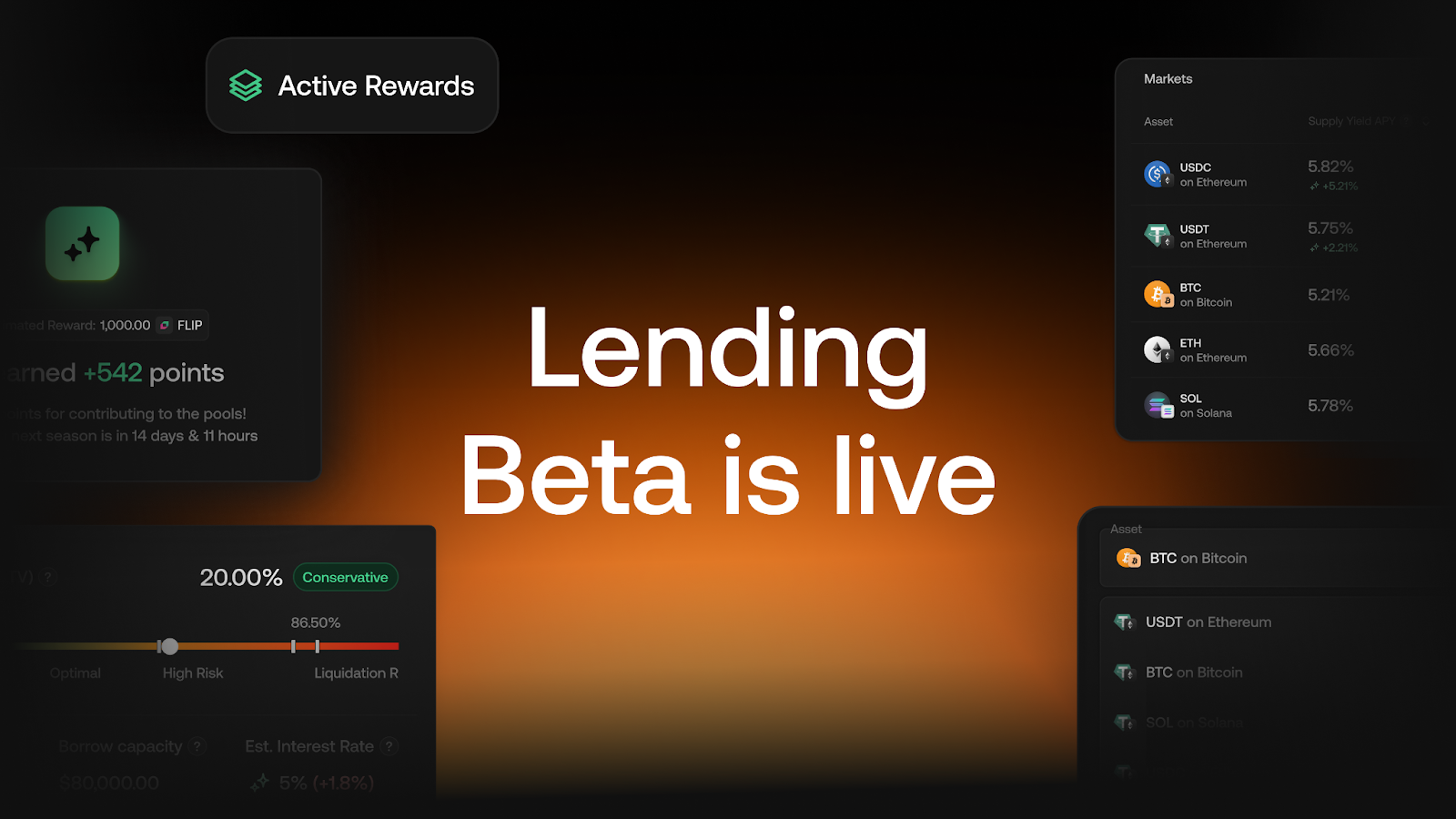
While still in beta, lending establishes the foundation for Chainflip as a broader liquidity platform rather than a single-purpose execution layer.
EVM Wallet Onboarding for Liquidity Providers
Another major milestone in Q4 was the introduction of EVM wallet support for liquidity providers.
Historically, LP participation required Polkadot-specific tooling, creating friction for Ethereum-native users. With EVM wallet onboarding, liquidity providers can now:
- Connect using familiar wallets such as MetaMask, Phantom, Rabby, and Rainbow
- Deposit assets and manage positions without Polkadot.js
- Onboard with significantly reduced setup complexity
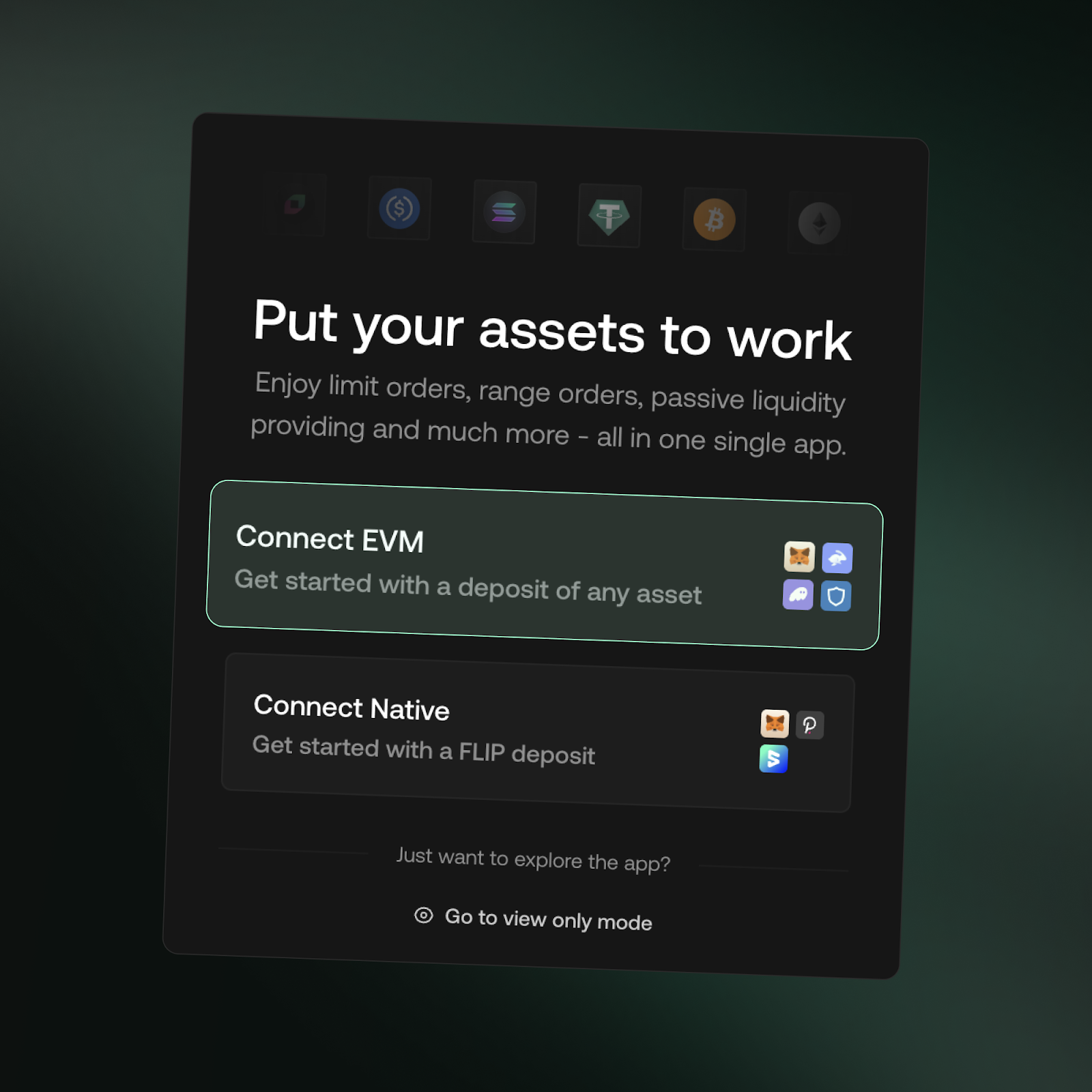
This change materially expands the addressable LP base and lowers the barrier for new capital to participate in Chainflip liquidity strategies.
Integrations and Distribution Growth
Distribution continued to expand throughout Q4, building on integrations introduced earlier in the year and highlighted in the November performance report.
Key integrations include:
- Phantom via Li.Fi, integrating native BTC, ETH and SOL swaps into the most renowned Solana wallet on the market
- MetaMask via Rango, enabling native BTC and SOL swaps through a widely used EVM wallet
- Binance Web3 Wallet via Rango, extending Chainflip access to a large retail audience
- Router Protocol, incorporating Chainflip liquidity into cross-chain routing infrastructure
- Hardware wallet support via SwapKit, including CoolWallet and Ellipal

Each integration reduces friction, broadens access, and strengthens Chainflip’s role as a core liquidity backend for wallets and aggregators.
Looking Ahead to 2026
With a strong economic foundation and multiple products now live, priorities for 2026 include:
- Expanding native lending beyond beta, with additional collateral types and refinements
- Further improving capital efficiency across swaps, lending, and liquidity strategies
- Continuing to broaden distribution through wallets, aggregators, and SDK integrations
- Ongoing improvements to performance, observability, and operational resilience
- Exploration of new chains and assets with strong volume capture potential for increased distribution.
These efforts aim to expand use cases, and reinforce Chainflip’s position as a core piece of cross-chain infrastructure.
Closing Remarks
Q4 2025 marked a clear transition for Chainflip.
The protocol delivered record economic performance while simultaneously expanding its product surface and reducing onboarding friction for both users and liquidity providers. With swaps, lending, and a growing integration footprint now working together, Chainflip enters 2026 as a multi-product liquidity network with sustainable, usage-driven economics.
— The Chainflip Labs Team