
Crypto Market Crashing? How to Swap Your Assets Without a CEX

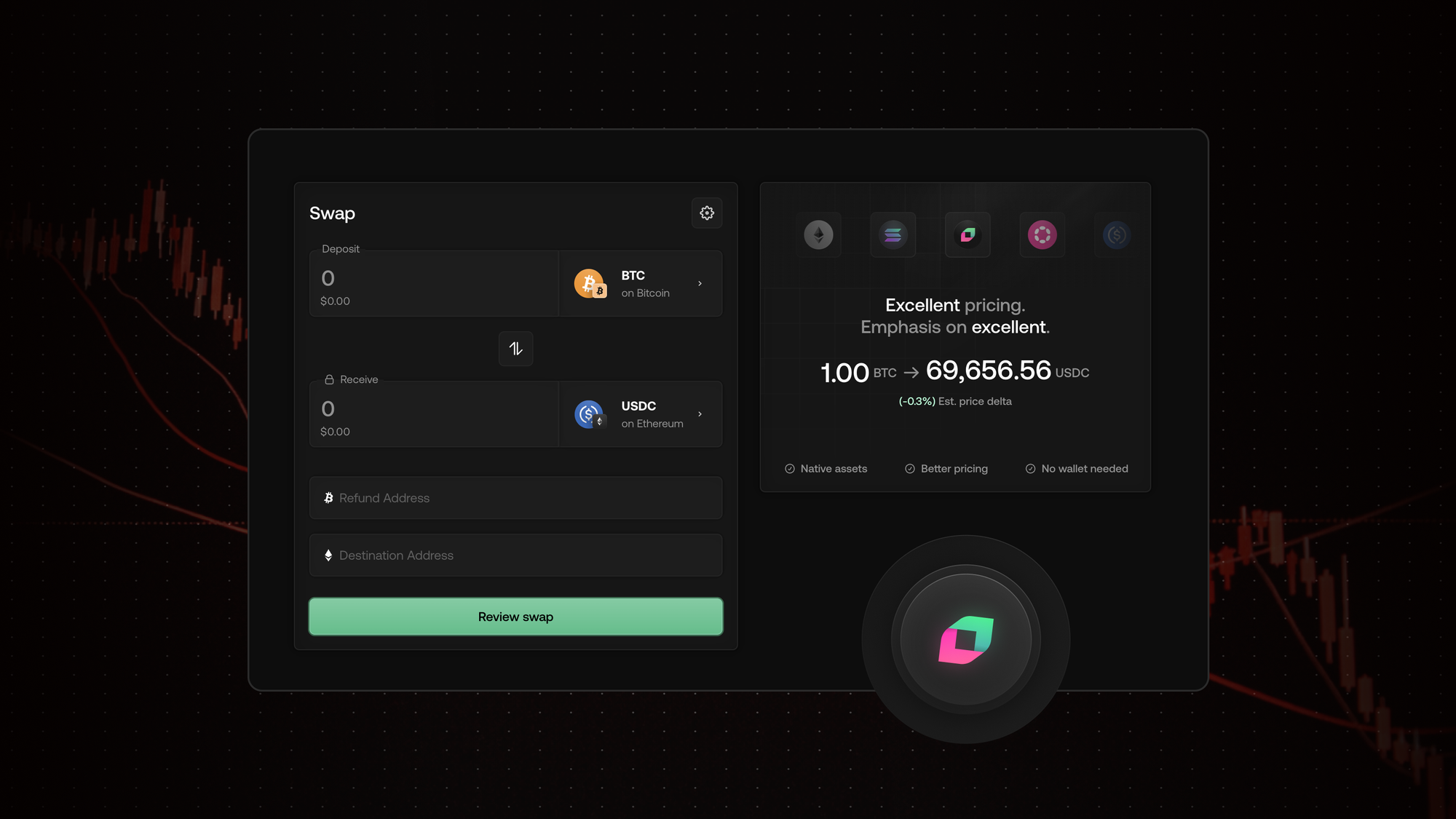
A guide to using Chainflip when the market is bleeding. Like the 'crypto flash crash' on the 5th of February 2026.
$2.6 billion liquidated in 24 hours. Bitcoin below $70K. Ethereum under $2,000. Over 570,000 traders wiped out. The Fear & Greed Index sitting at 5 out of 100.
That was yesterday. And it'll probably get worse before it gets better.
When markets move like this, most people do one of two things: panic-sell everything at the bottom, or freeze and watch their portfolio bleed. Neither works. The traders who come out of crashes in a better position than they entered are the ones who can actually move their assets between chains quickly, safely, and without relying on infrastructure that breaks under pressure.
That's what this post is about. Not theory. Not a pitch. Just a breakdown of how Chainflip's cross-chain swap protocol works during volatile markets, why it matters right now, and how it compares to the alternatives.
What Breaks During a Crash
Liquidity dries up fast. Try moving 10 BTC to Solana through a traditional bridge when the market is tanking and you'll feel it immediately. Slippage goes through the roof. Some bridges just stop processing. DEX pools thin out because LPs pull their capital at the first sign of trouble.
Wrapped token risk gets real. If you hold wBTC, you're trusting BitGo (or whoever the custodian is) to hold your actual Bitcoin. That's fine when everything is calm. But during a crash? When people start asking questions about counterparty exposure and solvency? That's when wrapped tokens stop feeling like Bitcoin and start feeling like IOUs. FTX taught people this lesson the hard way. Bridge exploits reinforced it. The total value lost to cross-chain bridge hacks sits above $2.8 billion historically, representing roughly 40% of all value hacked in Web3.
You can't move between chains. Maybe you see a buying opportunity on Solana but your capital is on Ethereum. Or you want to move stablecoins off a chain you don't trust anymore. Your options during peak volatility: a centralized exchange with 2-hour withdrawal times and overloaded support, or a bridge that may or may not be working. Neither is good enough when prices are moving 10-15% per hour.
How Chainflip Cross-Chain Swaps Work During Volatility
Chainflip doesn't use wrapped tokens. It doesn't use bridges in the traditional sense. When you swap BTC to ETH on Chainflip, you send real Bitcoin to the protocol, and receive real Ethereum on the other side. The swap settles through a decentralized validator network using threshold signature cryptography (TSS) with a 100-of-150 validator requirement.
That means no custodian holds your funds. No single party can run off with your Bitcoin. The protocol handles settlement directly between native chains.
During the kind of crash we saw yesterday, this architecture has specific advantages:
You can reposition between chains in under a minute. Bitcoin to Solana. Ethereum to Arbitrum. USDC on one chain to USDT on another. All native. No wrapping, no synthetic tokens, no bridge risk.
Liquidity comes from market makers who are incentivized to stay active during volatility (because that's where the spread is). Unlike AMM pools that drain during crashes, Chainflip's JIT (Just-In-Time) liquidity model means market makers actively fill your swap in real time, competing on price.
No KYC, no account, no withdrawal approval queue. You connect a wallet, swap, and receive native assets on the destination chain. That's it. No waiting in a support ticket queue while your assets lose 20%.
Chainflip vs. ThorChain vs. Bridges vs. CEXs
ThorChain is the most direct comparison. Both protocols handle native cross-chain swaps without wrapped tokens. But there are differences worth knowing:
ThorChain uses continuous liquidity pools, which means LPs deposit into pools and prices adjust algorithmically. Chainflip uses a JIT AMM model where market makers compete in real time for each swap. During crashes, the JIT model tends to give tighter spreads because market makers are pricing each trade individually rather than relying on pool depth that may have been withdrawn.
Both protocols are non-custodial. Both handle native assets. The main practical differences come down to liquidity model, supported chains, and execution speed.
Traditional bridges like Wormhole or LayerZero create wrapped representations of your assets on the destination chain. That wrapped USDC on Solana isn't the same as native USDC. You're adding a layer of smart contract risk on top of your position. During high-stress periods, bridge congestion can delay transfers significantly, and the history of bridge exploits makes this a risk worth considering.
Centralized exchanges (Binance, Coinbase, etc.) obviously work, but you're depositing assets into a custodial system, waiting for confirmations, and then waiting again for withdrawal. During peak stress, exchanges throttle withdrawals. During the February 2026 crash, Binance temporarily paused all withdrawals on February 3, citing technical difficulties, and again reportedly on February 4-5. If you need to move assets between chains in minutes, CEX round-trips can take hours.
When Chainflip Makes Sense During a Downturn
Rebalancing: You hold BTC on Bitcoin mainnet and want exposure to Solana or Ethereum. Instead of depositing to an exchange, swapping, and withdrawing (30-60 minutes on a good day, longer during crashes), you swap native BTC to SOL directly. One transaction.
Exiting risky positions: You have stablecoins on a chain where you're worried about the DEX or lending protocol you're using. Move those stablecoins to a different chain without going through a centralized intermediary.
Capturing price differences: During volatile sessions, the same asset can trade at different prices across chains. Arbitrageurs using Chainflip can move between chains faster than those using bridges or CEX deposits.
Avoiding CEX withdrawal freezes: After large liquidation events, exchanges often temporarily restrict withdrawals. If your assets are in a non-custodial wallet and you're swapping through Chainflip, you're not subject to those restrictions.
What Chainflip Doesn't Do
This isn't a leveraged trading platform. You can't short Bitcoin on Chainflip. You can't place limit orders (though this is on the roadmap). The protocol handles spot cross-chain swaps. If you need derivatives or margin, you'll still need a CEX or a perps DEX.
Chainflip also doesn't currently support every chain. The protocol supports Bitcoin, Ethereum, Polkadot, Arbitrum, and Solana, with Tron coming soon. If you need to move assets to chains outside that list, Chainflip won't help yet.
The Bigger Picture
Every crash reminds people why self-custody matters. Every bridge exploit reminds people why wrapped tokens carry risk. Every exchange withdrawal freeze reminds people why non-custodial infrastructure exists.
The question isn't whether another crash will come. It's whether you'll be able to move your assets when it does.
Chainflip is built for exactly that scenario. Fast native swaps between major chains, no custodian, no wrapped tokens, no KYC, no account.
You can decide for yourself whether that matters. Based on the past 48 hours, it probably does.
Resources
- Swap Now – Start swapping native assets
- Lend BTC – Borrow against native Bitcoin
- Lending docs – Technical guides and protocol details
- Blog – Product updates and announcements
- Chainflip Scan – Track swaps and network activity
Join us on Discord: https://discord.gg/chainflip-community
Join us on Telegram: https://t.me/chainflip_io_chat
Frequently Asked Questions (FAQ)
What is Chainflip?
Chainflip is a decentralized cross-chain swap protocol that lets you trade native assets directly between blockchains. Bitcoin to Ethereum, Solana to Arbitrum, and more. No wrapped tokens, no bridges, no custodians.
How is Chainflip different from a bridge?
Bridges lock your assets on one chain and mint a synthetic (wrapped) version on the destination chain. Chainflip doesn't do this. When you swap on Chainflip, you send native Bitcoin and receive native Ethereum (or whichever asset you're swapping to). No wrapped tokens are created at any point.
Is Chainflip safe to use during high volatility?
The protocol uses a decentralized validator network with threshold signature cryptography (TSS). No single validator ever controls your funds. Swaps settle directly between native chains. The protocol doesn't hold your assets in custody at any point during the swap.
How fast are swaps on Chainflip?
Most swaps complete in under a minute. Bitcoin swaps require 3 block confirmations (roughly 30 minutes) before execution, then settlement happens in seconds.
Do I need an account or KYC to use Chainflip?
No. Chainflip is permissionless. Connect a wallet, select your swap pair, and go. No account creation, no identity verification.
What chains does Chainflip support?
Currently: Bitcoin, Ethereum, Polkadot, Arbitrum, and Solana. Tron support is coming soon.
How does Chainflip compare to ThorChain?
Both handle native cross-chain swaps without wrapped tokens. The main differences: Chainflip uses a JIT (Just-In-Time) AMM where market makers compete per-swap for better pricing. ThorChain uses continuous liquidity pools. Both are non-custodial and decentralized.
How does Chainflip compare to Wormhole?
Wormhole is a messaging protocol and bridge, not a swap protocol. When you move assets through Wormhole, you typically receive a wrapped version of your token on the destination chain. That wrapped token carries smart contract risk and isn't the same as holding the native asset. Chainflip handles actual native-to-native swaps with no wrapped tokens involved. If you want to go from BTC to ETH, Chainflip gives you real ETH, not a Wormhole-wrapped version of it.
How does Chainflip compare to LayerZero or Stargate?
LayerZero is a cross-chain messaging protocol, and Stargate is a bridge application built on top of it. Stargate handles stablecoin transfers well across EVM chains, but it doesn't currently support native Bitcoin swaps. Chainflip supports Bitcoin, Ethereum, Polkadot, Arbitrum, and Solana with direct native swaps, which is where it fills the gap.
How does Chainflip compare to deBridge?
deBridge uses an intent-based model where professional solvers fill your order across chains. It avoids wrapped tokens on supported routes and is fast. The trade-off is that deBridge relies on a smaller validator set for verification compared to Chainflip's 150-validator TSS network. Chainflip's JIT AMM also means market makers compete per-swap for your order, which can result in tighter pricing during volatile conditions. Both are non-custodial and avoid wrapped tokens.
Why use Chainflip instead of a centralized exchange like Binance or Coinbase?
Centralized exchanges require KYC, hold your funds in custody, and can freeze withdrawals during market stress. During the February 2026 crash, Binance temporarily paused withdrawals on February 3 and reportedly again on February 4-5, while users waited to move their own assets. With Chainflip, you connect a wallet, swap, and receive native assets directly. No account, no identity verification, no withdrawal queue, and no one can freeze your funds mid-transaction.
What are the fees?
Fees vary by swap pair and current network conditions. The protocol charges a small network fee, and you'll pay the standard gas fee on both the source and destination chains. You can check live quotes at swap.chainflip.io before executing.
Can I swap stablecoins across chains on Chainflip?
Yes. USDC and USDT swaps between supported chains are available. This is one of the most common use cases during volatile markets when people want to reposition stablecoins without wrapping or CEX deposits.
What wallets work with Chainflip?
Any wallet that supports the chains Chainflip operates on. MetaMask, Phantom, Ledger, Trezor, SafePal and others all work. You just need a wallet address on the destination chain to receive your swapped assets.